
One of the most common questions I get asked when someone comes to see me for the first time is: "How many sessions am I going to need?" It's completely understandable — and I always give the same honest answer: it depends. But rather than leave it there, I want to walk you through exactly what your recovery journey looks like, because understanding the process makes a real difference to how you approach it.
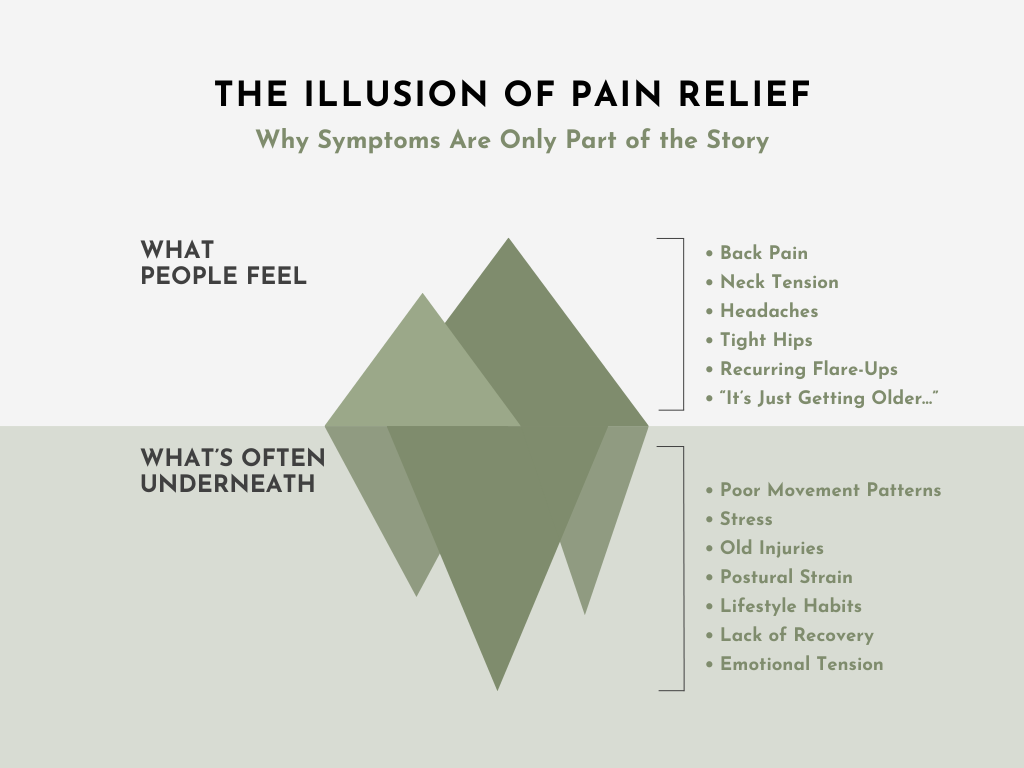
Pain Is Just the Tip of the Iceberg
Most people who come through my door aren't just dealing with pain in isolation. They're dealing with what that pain is stopping them from doing — whether that's playing sport, picking up their grandchildren, walking the dog, or simply putting their shoes on in the morning.
And more often than not, the injury itself is just the last straw on the camel's back. There are usually layers underneath: stress, poor sleep, nutritional imbalances, longstanding postural habits, or a history of old injuries that were never quite resolved. Pain is often the last thing to appear — and the first thing to disappear. Just because it's gone, it doesn't mean the underlying issue is resolved.
How the Body Actually Heals
From a physiological standpoint, healing happens in three distinct phases:
The Inflammatory Phase — lasting anywhere from a few days to three weeks. The body increases blood flow to the area, mops up tissue debris, and activates the immune system to begin repair. Worth knowing: current research suggests that ice and anti-inflammatories may actually slow this process down rather than help it.
The Fibroblastic Phase — the body begins laying down new collagen to stabilise and repair the damaged tissue.
The Remodelling Phase — tissue matures and adapts. If managed well, scar tissue integrates properly. If not, it can reduce elasticity and leave the area more vulnerable to future injury.
This whole process can take anywhere from three to 18 months — and that's completely normal. The fact that your symptoms ease within a few weeks is a great sign, but it doesn't mean the healing is complete.
Your Three-Phase Road Map
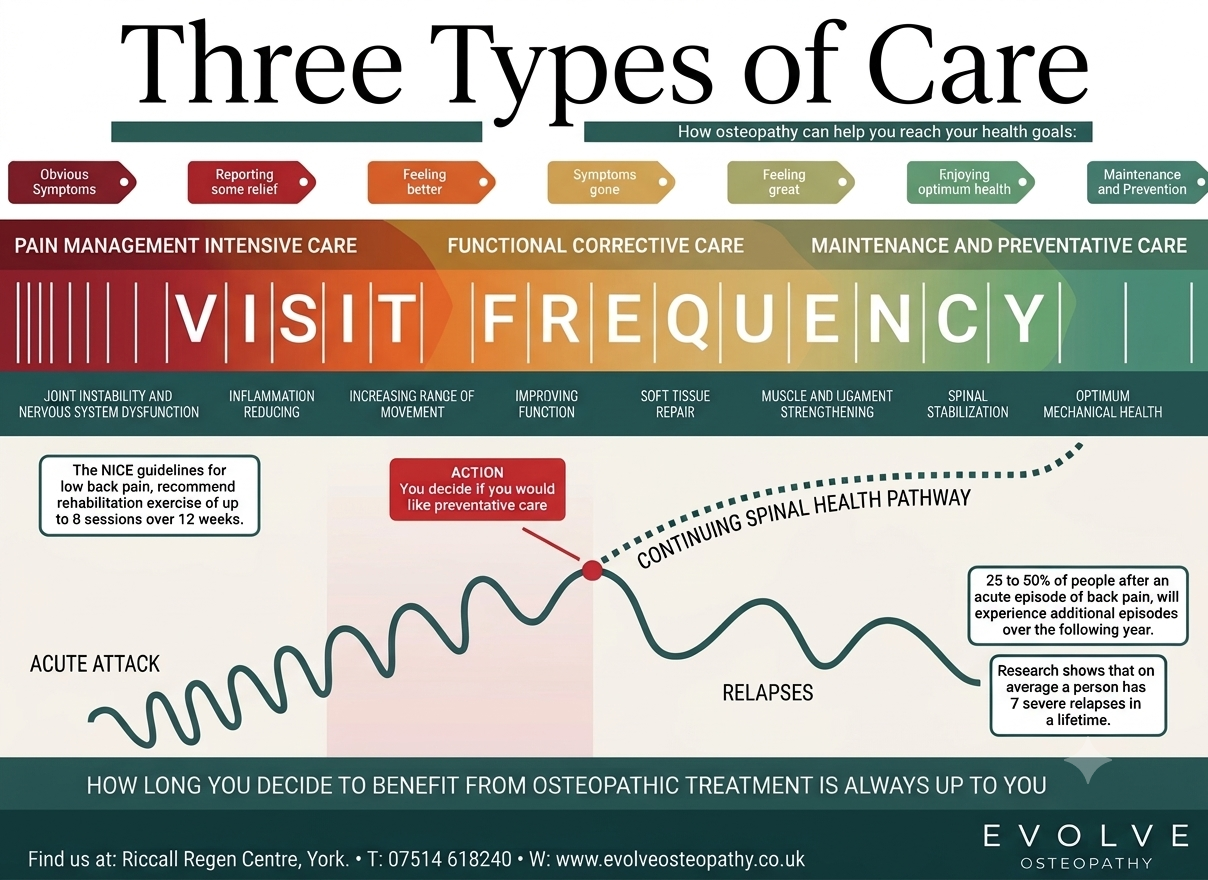
Understanding those healing phases is the key to understanding the road map I take every patient on. There are three phases of care, and each one aligns with what your body is doing at that stage of recovery.
Phase 1: Pain Relief
The priority here is simple: get you feeling better as quickly as possible. I'll typically see you more frequently in this phase — often weekly — because your body benefits from regular support while it's in active repair. Treatment focuses on reducing pain, supporting the natural inflammatory process, and keeping you as functional as possible while healing gets underway.
Phase 2: Corrective Care
This is, in my view, the most important phase — and the one most people skip. Once the pain settles, it's tempting to think you're done. But this is precisely when the real work begins.
Think of it like building a house: you wouldn't start on the walls before the foundations are solid. This phase is about restoring strength and stability, improving posture and movement, and addressing the contributing factors that led to the injury in the first place. Visits become less frequent — often fortnightly — but they matter enormously. Skipping this phase is the most common reason injuries keep coming back.
Phase 3: Wellness
This phase is entirely optional and always your choice. Most patients here are pain-free and simply want to stay that way. A monthly or six-weekly visit keeps things on track — less like treatment, more like a service. This is also where I bring in the wider conversation around nutrition, sleep, stress, and exercise — the foundations of long-term health.
So, How Many Sessions Does That Actually Mean?
By this point the honest answer probably makes more sense: it depends on where you're starting from, how long the problem has been there, and what your goals are. A recent, straightforward injury will need far less input than something that's been building for years. What I can promise is that I'll always be transparent with you — at every stage — about where you're at, what I think you need, and why. You'll never be kept in the dark or strung along.
If you're living with pain that's affecting your quality of life, the first step is a thorough assessment. From there, we can map out your road to recovery together.
Book at www.evolveosteopathy.co.uk