
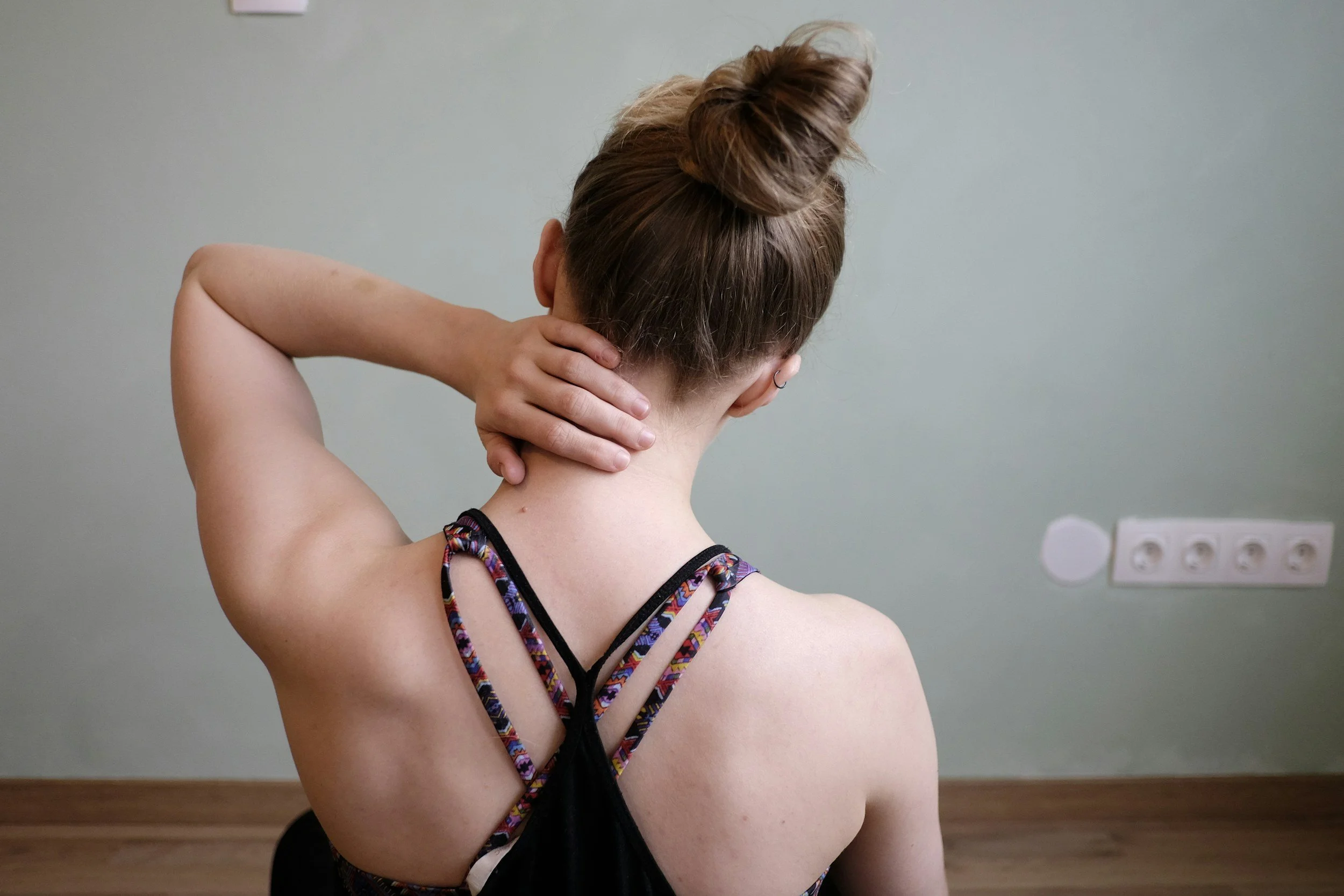
If you’ve noticed an ache, tingling or numbness travelling from your neck, through your shoulder and down into your hand, you’re not alone. Sometimes it’s a mild ache. Sometimes it’s a shooting pain, or a weakness that makes holding a cup of tea harder than it used to be, or means you keep dropping things. One possible cause is thoracic outlet syndrome (TOS).
Feel free to watch my video blog from my You Tube Channel below:
What Is Thoracic Outlet Syndrome?
The “thoracic outlet” is the narrow space between your collarbone and first rib, where the nerves of the brachial plexus and the major blood vessels pass from your neck into your arm. When that space is reduced, those structures can be irritated or compressed.
The three types
Neurogenic TOS (about 95% of cases). The brachial plexus is irritated or compressed. This is the type we most often see in clinic.
Venous TOS (around 4%). The subclavian vein, which returns blood from the arm to the heart, is affected.
Arterial TOS (around 1%). The subclavian artery, which carries blood to the arm, is affected.
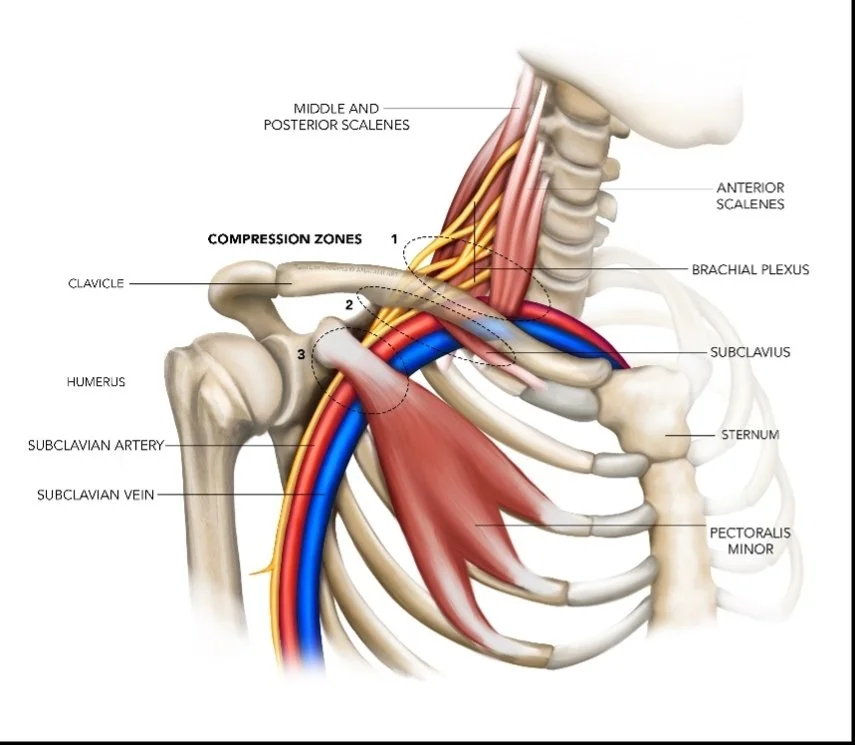
Ref: Sports Injury Bulletin.com
Why Diagnosis Matters
Thoracic outlet syndrome is often over-diagnosed, particularly when symptoms are actually coming from the lower neck (C7 to T1), such as a disc problem, degenerative change or facet joint irritation. Arm symptoms can also come from the carpal tunnel or elbow. A careful assessment matters, so you’re treating the right thing.
What Causes It?
Tightness in the anterior scalenes, pectoralis minor and subclavius muscles
Poor posture: desk work, phone use and forward head posture, which round the shoulders and drop the sternum
Heavy weight training, where well-developed deltoids, chest and lats pull the shoulders forward and into internal rotation
Large breasts, which can contribute to rounded shoulders and slumped posture
A cervical rib, an extra rib arising from the neck, which can narrow the space
Previous trauma such as whiplash or a fall, and repetitive overhead work (decorating, hairdressing, swimming, racket sports)
Stress and faulty breathing (more on this below)

When To See Your GP First
Venous and arterial TOS need medical attention, as do other causes of arm symptoms such as a cervical rib or a tumour at the top of the lung (Pancoast tumour). See your GP promptly if you notice:
Swelling of the arm or hand, or a bluish or purple colour
A cold, pale hand or a weak or absent pulse
Sudden onset of symptoms, especially after strenuous arm activity
Unexplained weight loss, a persistent cough, or a drooping eyelid alongside arm symptoms
How Osteopathy Can Help
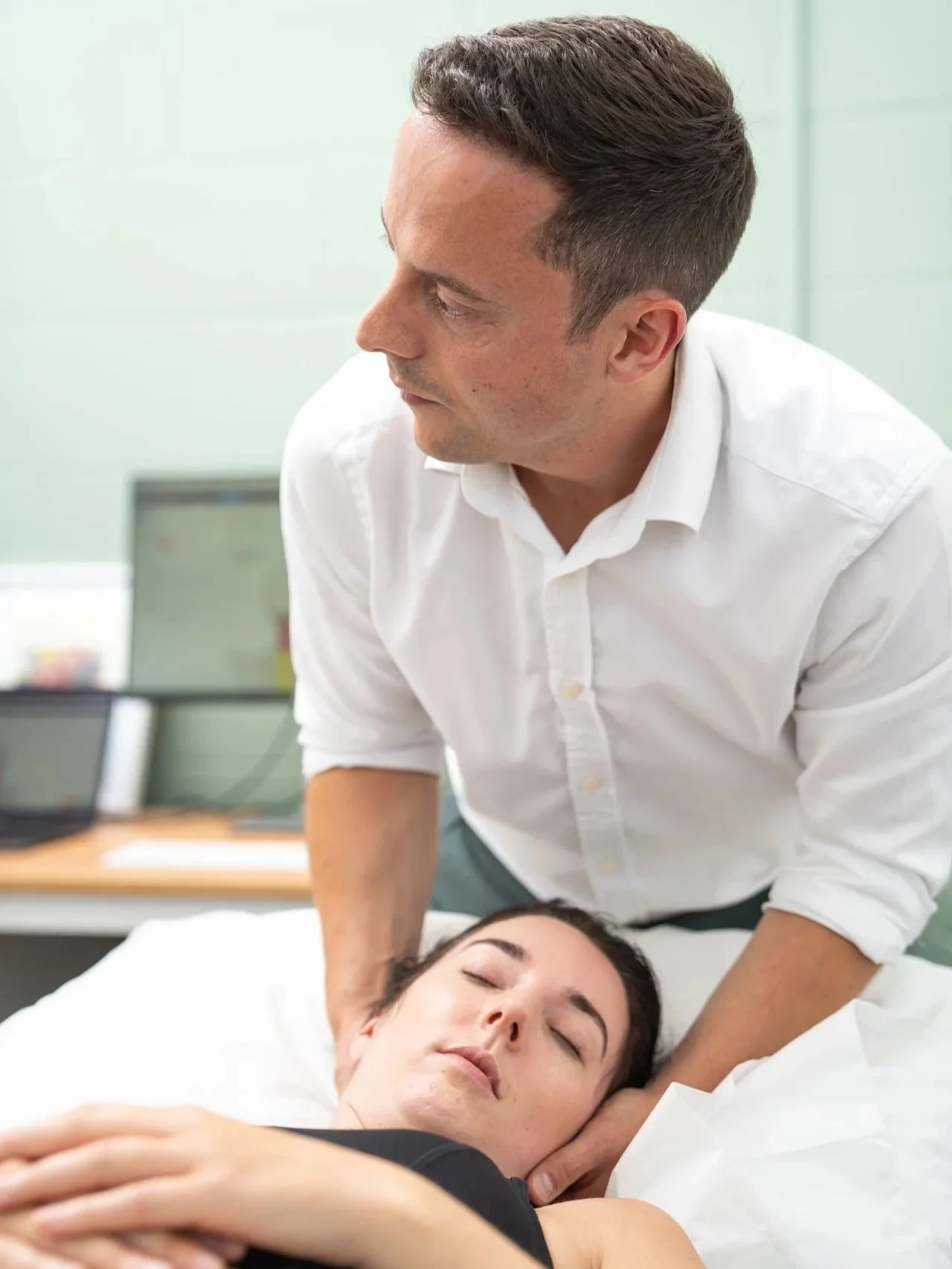
For the large majority of people with neurogenic TOS, a hands-on osteopathy and rehabilitation-based approach can make a real difference. In clinic we may:
Improve mobility of the rib cage and thoracic spine
Use gentle decompression and traction of the neck
Release tension in the scalenes and sternocleidomastoid with neuromuscular techniques
Support lymphatic drainage in the area
Give you a tailored plan to improve posture and function
Pain relief is only the first step. Lasting change usually comes from correcting the reasons the space is reduced in the first place (posture, strength, breathing, load) and then building resilience so it stays settled.

The Breathing Connection
When we’re stressed or anxious, the sympathetic nervous system speeds up breathing. Many people shift from deep belly breathing to upper-chest breathing, or become mouth breathers, which overworks the scalenes and other accessory breathing muscles and under-uses the diaphragm. You can stretch and strengthen all you like, but if your breathing pattern keeps those muscles switched on, symptoms tend to come back.
What you can do at home
Posture breaks. Every 30 to 45 minutes at a desk, stand, roll the shoulders back and open the chest.
Chest stretch. Doorway pec stretch, 30 seconds, a gentle stretch rather than a strong pull.
Scalene stretch. Gently, and stop if you get tingling or pins and needles.
Strengthen the postural muscles. Thoracic extensors and deep neck extensors (chin tucks are a good start).
Diaphragmatic breathing. 5 minutes a day of slow belly breathing, with a longer breath out.
Rethink your load. Switch shoulder bags to a rucksack, lighten the load, and avoid sleeping with your arm overhead.
If any exercise increases numbness, tingling or pain, ease off and get it assessed. TOS isn’t one-size-fits-all.
Ready To Get Started?
If arm pain, neck pain or headaches are getting in the way, you can book an appointment online at evolveosteopathy.co.uk. I’m based at the Riccall Regen Centre, between York and Selby.