

Struggling with neck pain, stiffness or headaches? In this blog post I wanted to explain some common causes I see clinically, warning signs to take seriously, and what you can do at home to help.
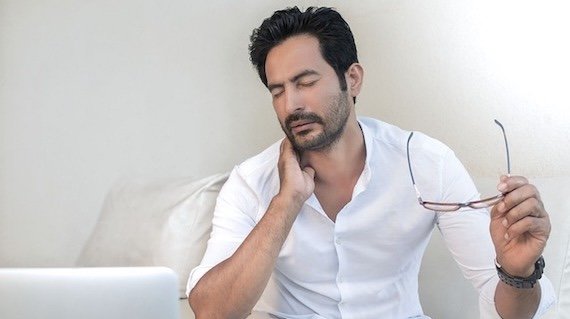
Most of us have woken up with a “cricked” neck. You turn over in the night, or glance over your shoulder at a blind spot, and suddenly you can’t turn your head without moving your whole body, like a mummy! Neck pain (and back pain) is one of the most common reasons people come to see me as an osteopath, and it can show up in a few different ways.
Feel free to watch my video blog from my You Tube Channel below:
How Neck Pain Tends To Show Up
Sudden (acute) neck pain. This often follows something simple like lifting in the garden, sleeping awkwardly or twisting to check your blind spot when driving. It’s very painful and stiff where turning your head either way can feel impossible.
Gradual neck pain. For others, pain and stiffness build slowly over time, sometimes as part of the ageing process.
Neck pain with headaches. Some people also get pain spreading up to the back or side of the head, and sometimes towards the eye.
When The Nerves Are Involved
Between each bone in your spine sits a disc. If a disc in the neck is injured or bulging, it can irritate the nerves that exit the spine at that level. This is called cervical radiculopathy. Depending on which nerve is affected, it can cause:
Shooting pain down the arm and into the hand
Tingling or numbness
Weakness, such as dropping objects or struggling to lift the arm
When To See Your GP Or Go To A&E
This part matters. If you’re older and have neck pain along with any of the following, please see your GP or go to A&E rather than booking with an osteopath first:
Dropping objects
Weakness in the hand
Balance disturbance
Bowel or bladder disturbance
These can point to other age-related changes in the neck that need medical assessment. If it’s a simple strain, though, osteopathy is well suited to helping.
How Osteopathy Can Help
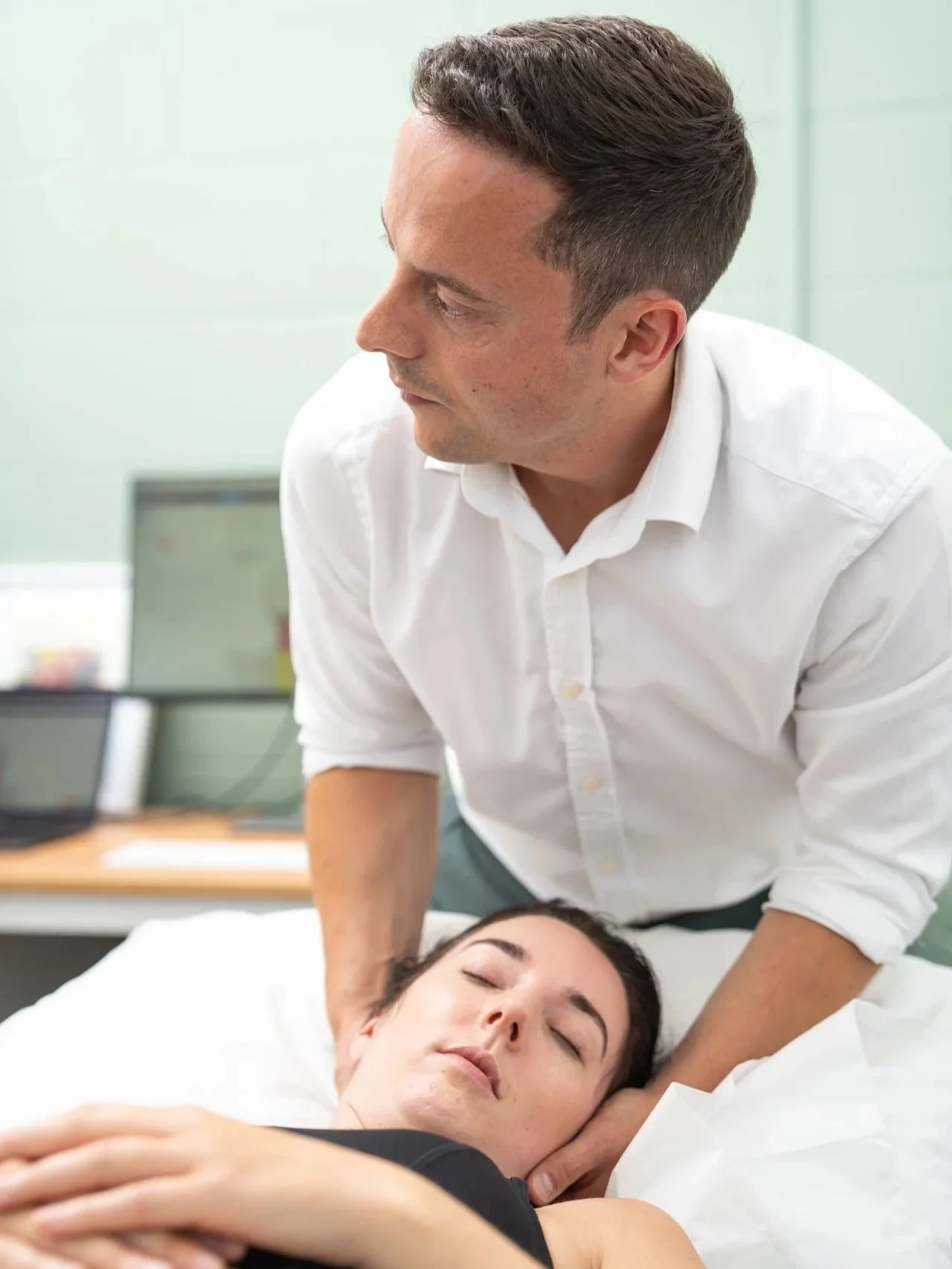
For neck pain and stiffness, including gradual, age-related stiffness, osteopathic treatment often includes joint mobilisation, massage and traction.
My own background in neuromuscular therapy, trigger point work, acupuncture and sports massage means I take a particular interest in the soft tissues. Trigger points can contribute to both neck pain and headaches, and several muscle groups are worth knowing about:
Sternocleidomastoid (at the front of the neck)
Suboccipitals (at the base of the skull)
Muscles of the jaw (the muscles of mastication)
All of these can harbour trigger points and refer pain to the back of the head and neck, which is why I always look beyond the spot that hurts.
What You Can Do At Home
Be mindful of how you sit. If you spend long periods at a desk, or slouched over a laptop on the sofa, you may develop forward head posture, where the head sits forward of the shoulders. This can compress and irritate the base of the skull, and the muscles around it can become very tight.
Keep moving. Research suggests it isn’t always about posture alone. Often the problem is simply sitting for a long time without moving your neck. Gentle exercises or stretches, or just a walk or some exercise during the day, can make a big difference.

Still Struggling?
If you’ve had neck pain for a long time, or you’ve tried everything at home, it’s worth seeing an osteopath or another healthcare professional near you.
I’m based at the Riccall Regen Centre, between York and Selby. You can book online at evolveosteopathy.co.uk.
Tom Smith, M.Ost, DO, ND, is a GOsC-registered osteopath and naturopath at Evolve Osteopathy.