
Why Sleep Is the Most Underrated Part of Your Recovery
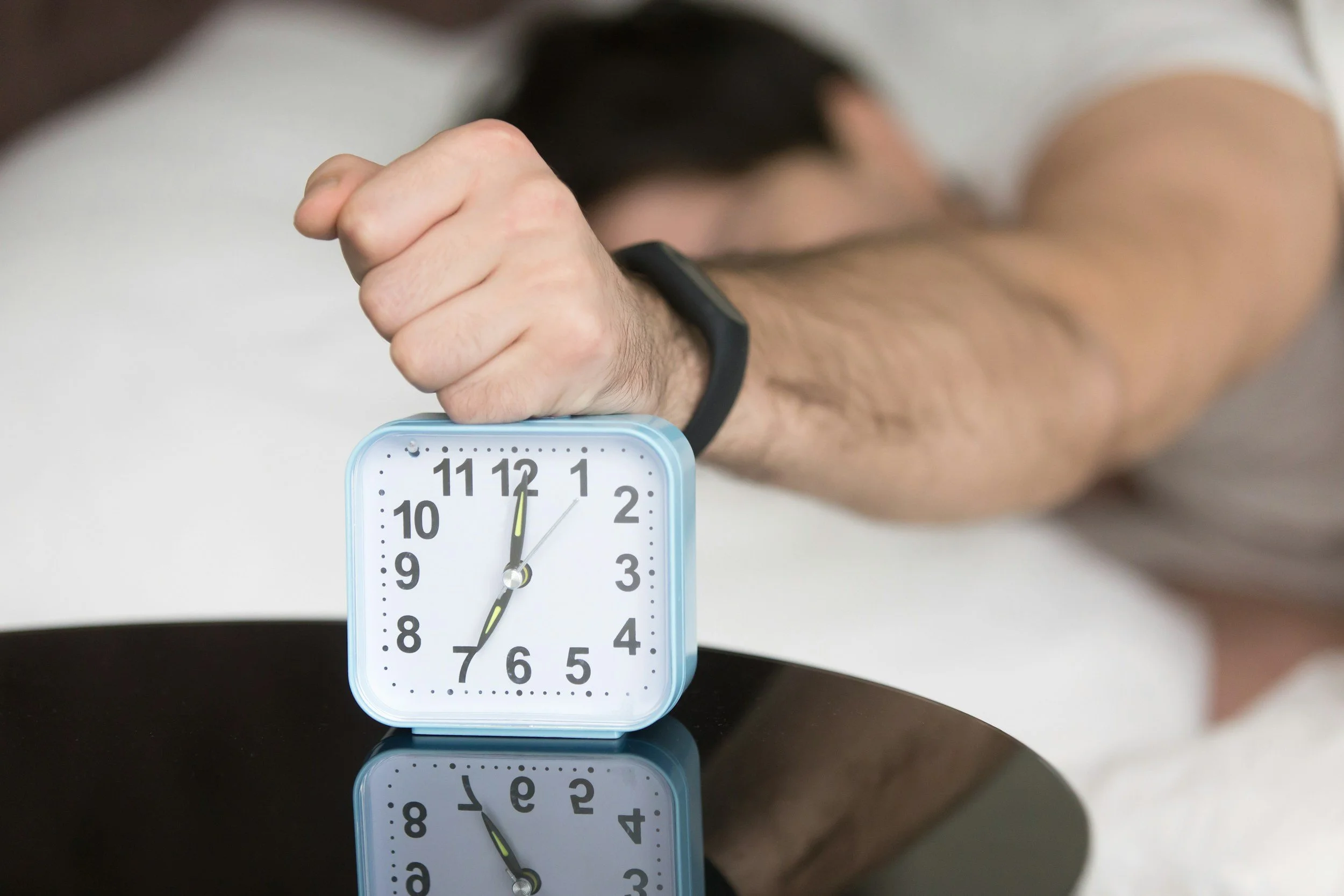
I had a conversation with a patient earlier this week about sleep, and it got me thinking about just how many people struggle with it. Whether it's difficulty staying asleep, disrupted nights due to pain, or simply not knowing what good sleep actually looks like — it's far more common than most people realise.
What is Sleep Hygiene?
Sleep hygiene isn't about being clean — it's a term used to describe the habits and conditions that set you up for a better night's sleep. And to understand why it matters, it helps to understand how we were designed to sleep in the first place.
Before electric light, we followed the sun. Our bodies woke with daylight and wound down with darkness. It wasn't until Thomas Edison's light bulb that we started tricking our biology into thinking it's perpetually summer. The problem is that your body can't tell the difference between sunlight and artificial light — as soon as light hits your skin, receptors trigger a cortisol release, signalling that it's time to be awake and alert. This suppresses melatonin, your sleep hormone, and disrupts the natural wind-down process. You might still fall asleep out of sheer exhaustion, but the quality of that sleep is often poor — and you'll likely wake up feeling it.
The Repair Window You Might Be Missing
We each have an internal biological clock, and for most people it follows a similar pattern. Physical repair during sleep tends to occur between around 10pm and 2am, while mental and emotional repair happens from 2am through to around 6am. If you're regularly going to bed well after 10pm, you're cutting into that physical repair window — which matters enormously if you're dealing with aches, pains, or recovering from injury.
The Cascade Effect of Poor Sleep
Poor sleep doesn't just leave you tired. It tends to set off a chain reaction: you crave sugar and caffeine to compensate, you might skip breakfast because you're not hungry, and your blood sugar becomes harder to regulate throughout the day. Over time, this can affect your mood, your mental-emotional state, and contribute to anxiety or low mood. Sleep deprivation is also a stressor in itself — it keeps your nervous system in a sympathetic, fight-or-flight state, which is the last thing you need when your body is trying to recover.
And here's something worth sitting with: pain is also a stressor. Financial pressure, relationship stress, poor hydration, lack of movement, anxiety — all of it accumulates. Your body doesn't separate these sources of stress; it holds them together. Sleep is one of the few things in that list you have direct control over, and it's free. Sometimes simply getting to bed on time is one of the most powerful things you can do for your health.
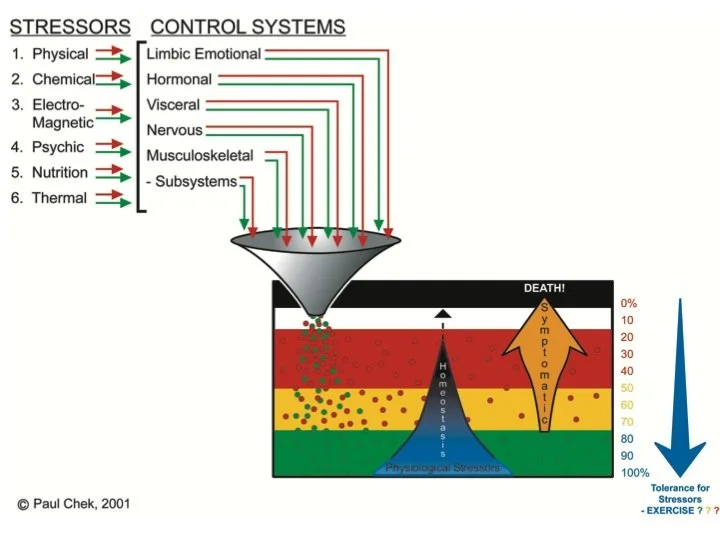
Image taken from Paul Chek’s Book “How to Eat Move and Be Healthy”
Practical Steps to Improve Your Sleep
Here are some of the most impactful changes you can make:
Caffeine and sugar — Caffeine has a half-life of roughly six hours. A cup of tea or coffee at 6pm still means measurable caffeine in your system at midnight. Many practitioners suggest cutting caffeine off by midday, particularly if sleep is already an issue. Sugar has a similar stimulating effect on the nervous system, so it's worth limiting sweet foods in the evening too.
Alcohol — A lot of patients mention having a glass of wine to wind down, and while it might feel relaxing, alcohol plays havoc with blood sugar regulation through the night and is also a diuretic. Dehydration alone is a significant factor in recovery — research suggests that being just 2% dehydrated equates to roughly a 10% drop in concentration and performance.
Your bedroom environment — Think of your bedroom as a cave: dark, cool, and free from stimulation. Avoid having your phone plugged in beside your bed, as electromagnetic fields from electrical devices — even through the wall — can interfere with sleep quality. Electric blankets are worth reviewing for the same reason. A TV in the bedroom is another common disruptor; the light and mental stimulation it creates work against the conditions your brain needs to properly switch off.
If Pain is Keeping You Awake
If discomfort is a significant factor in how you sleep, that's worth addressing directly rather than working around it. Getting your pain under better control can make an enormous difference to your sleep quality, which in turn supports your recovery — it's a positive cycle once it gets going. I'll cover sleep positioning and comfort strategies in a future post, but in the meantime, if pain is affecting your rest, it's worth booking in so we can look at what's driving it.
Sleep well.

Ready to Get to the Root Cause?
If you're tired of guessing what's going on and want a thorough, no-nonsense assessment, I'd love to help.