
Sacroiliac Joint Pain: Why Stretching Alone Often Isn’t Enough
Do you get low back or pelvic pain that spreads into the buttock, groin or hamstring? Is it worse when you sit down or bend forwards? You may be dealing with sacroiliac (SI) joint pain. If you’ve already tried exercises and stretches at home without much luck, this one is for you.
Feel free to watch my video blog from my You Tube Channel below:
What Is The Sacroiliac Joint?
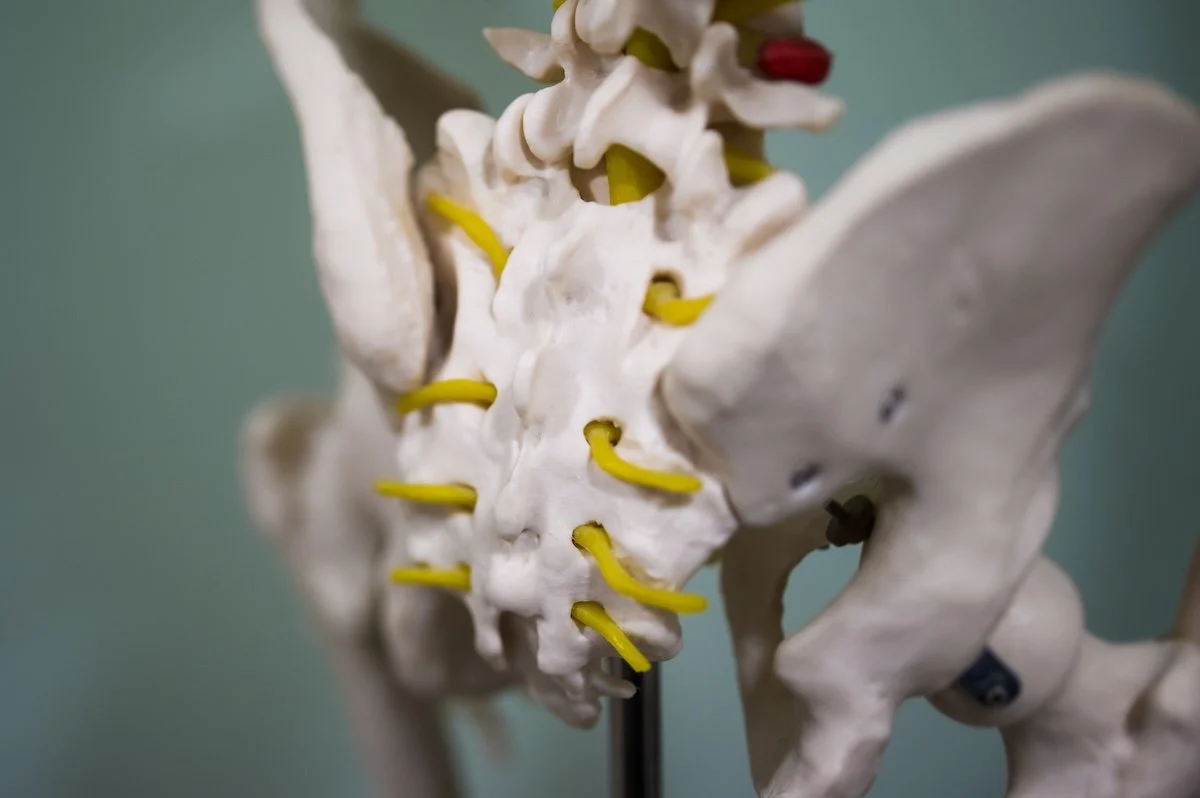
The sacrum is the triangular bone at the base of your spine. It meets the ilium, part of the pelvis, on each side, and the joint between them is the sacroiliac joint. It’s held in place by strong ligaments at the front and back, including the interosseous ligament, the sacrotuberous and sacrospinous ligaments, and the iliolumbar ligament. When the SI joint hurts, it’s often one of these ligaments or the joint capsule that’s irritated.
SI joint problems are common alongside low back pain. Whether the pain starts in a disc, a facet joint or a muscle, the SI joint is often involved too.
Common Contributing Factors
Inflammatory conditions. Ankylosing spondylitis and related conditions can affect the SI joints. Warning signs include a family history of autoimmune or inflammatory disease, or a personal history of psoriasis, inflammatory bowel disease or Raynaud’s. Morning stiffness that lasts a long time and eases with movement but worsens with rest is another one. If this sounds like you, ask your GP about blood tests to rule it out.
Pregnancy. Pregnancy hormones relax the ligaments to prepare for birth, which can leave the pelvis less stable. Many pregnant women find an SI support belt helpful.
Leg length differences. These can be apparent or true, and may come from hip or sacroiliac osteoarthritis, or from a scoliosis that tilts the pelvis.
Trauma. A car accident, a heavy tackle, or even stepping awkwardly off a curb can jar the joint.
Is It Really The SI Joint?
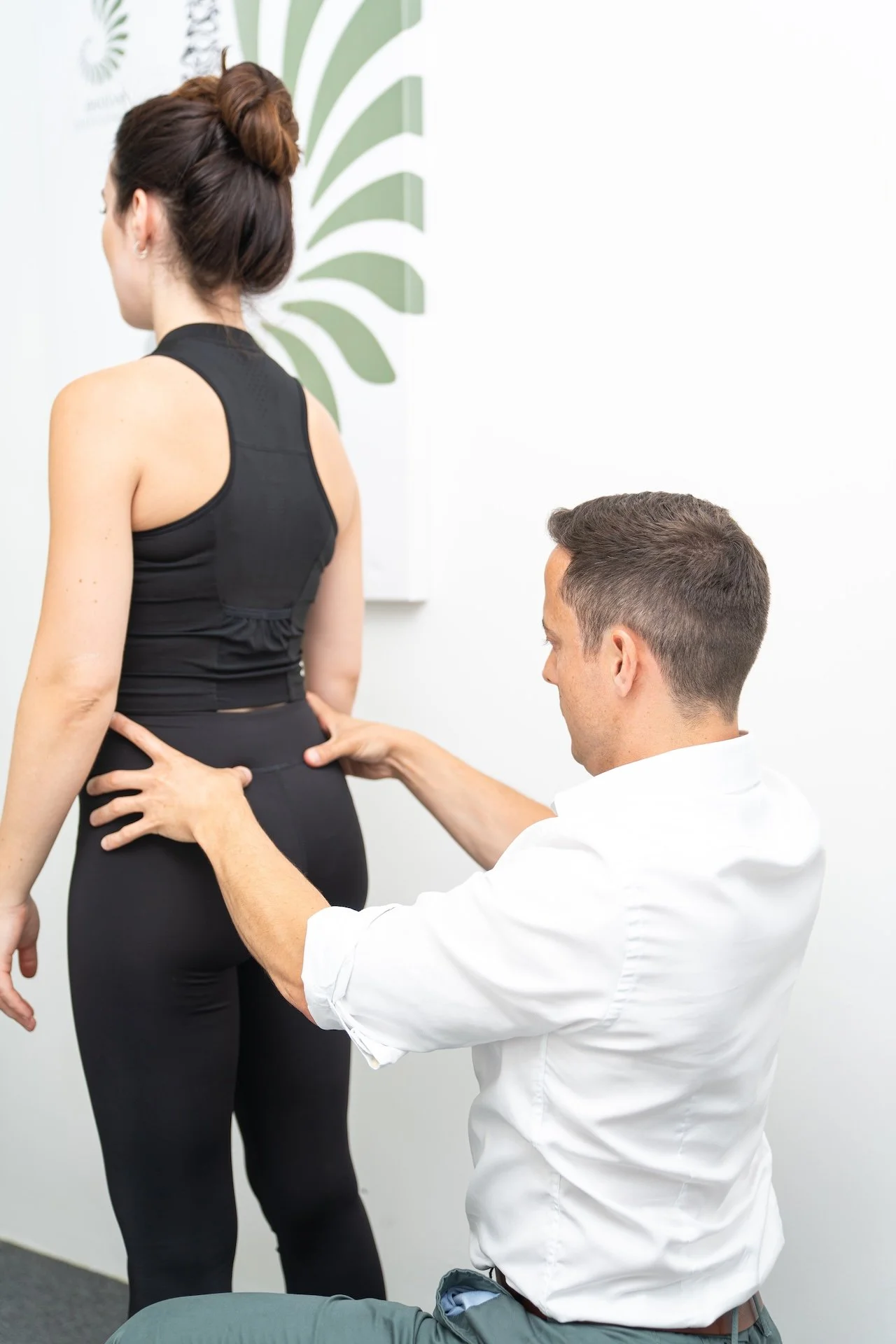
Lumbar discs and facet joints can mimic SI joint pain. That’s why, in clinic, I never rely on a single test. I use a cluster of tests so we can be confident about where your pain is coming from.
Looking Beyond The Joint
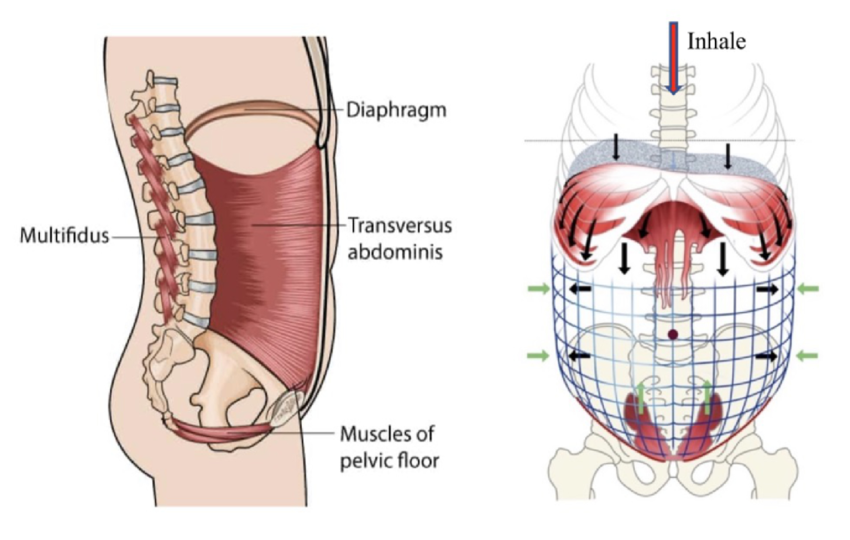
If we only look at the SI joint, we’re looking at the pelvis through a straw. The pelvis is stabilised by a “inner unit” of muscles: the transversus abdominis, the multifidus muscles along the spine, the respiratory diaphragm and the pelvic floor. Physiotherapist Diane Lee calls this the “circle of integrity”, a bit like the body’s own weightlifting belt. Research by Vleeming suggests it takes surprisingly little force to provide stability across the joint, but those muscles need to be working well.
There are many reasons the deep abdominal wall might not be doing its job. In my clinical experience, gut irritation from diet or food intolerances, and the monthly hormonal changes of the menstrual cycle, may play a role in some patients. I see these as areas worth considering rather than proven causes.
Posture matters too. The upper neck (atlas), the jaw and the eyes all influence how we hold ourselves, because the body works hard to keep the eyes and ears level with the horizon. Posture isn’t always the cause of pain, but it’s worth looking at as part of the whole picture.
Why The Neck And Jaw Matter For The Pelvis
My approach here draws on the CHEK Totem Pole system, developed by Paul Chek and taught in the CHEK Institute’s Integrated Movement Science (IMS) training. The idea is that the body works like a totem pole, with each segment sitting on the one below and there being a hierarchical relationship of the body's survival reflexes and control centers. It prioritises human physiological systems from the most important to survival at the top (breathing) to dependent compensation points at the bottom (the spine and extremities). A problem at the top can show up at the bottom.
The body doesn’t work in isolated parts. Think of it like a totem pole, where each segment sits on the one below it and affects the one above. A problem at the top can show up at the bottom, and the other way round.
One reason for this is the righting reflex. Your body is built to keep your eyes, ears and jaw level with the horizon, because these are the sensory systems it most wants to protect. If something disrupts that, such as an upper neck (atlas) that’s rotated, side-bent or translated after trauma or muscle imbalance, or a jaw (TMJ) that isn’t working well, the body adapts. It changes your posture further down the chain to keep your head level, and that can include the pelvis.
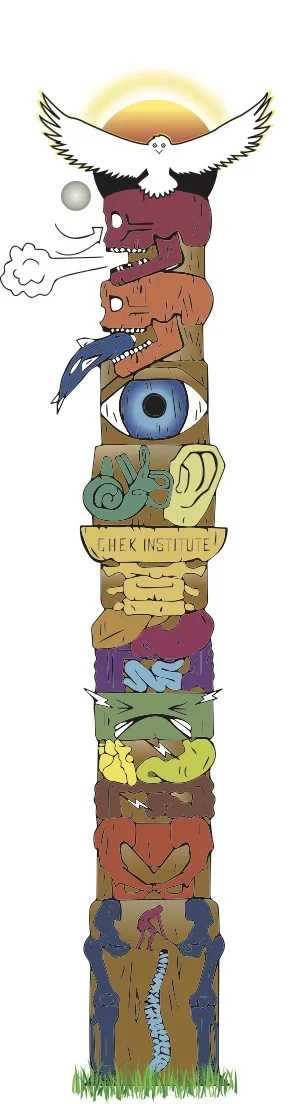
You can see a simple version of this in everyday life. Someone with a better eye will turn to look with it. Someone with hearing loss on one side will angle their head to favour the better ear. Your posture reorganises around the senses it’s protecting.
This doesn’t mean posture is always the cause of pain, and it isn’t the whole story. But if we only look at the sacroiliac joint, we’re looking at the pelvis through a straw. So alongside the joint itself and the deep core, I also look at the neck and jaw, because they can influence what the pelvis has to cope with.
My Approach
At Evolve Osteopathy, we start by looking at the pelvis, then widen the view to the whole person. That’s what I mean by a holistic approach.
If you’re struggling with SI joint pain, you can book online at evolveosteopathy.co.uk or get in touch. We’re based at the Riccall Regen Centre, between York and Selby.