
Is Posture Really Causing Your Pain?
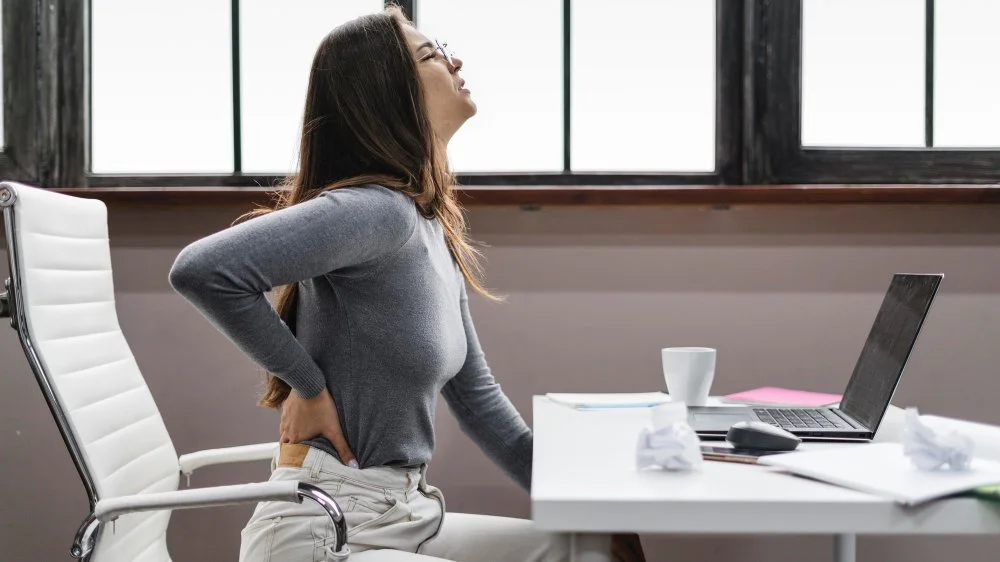
Posture has long been a focal point when explaining aches and pains — particularly through a mechanical lens. But what does the research actually suggest? Increasingly, the evidence points away from posture itself as the primary culprit, and toward movement (or lack of it) as the more significant factor.
The key distinction is this: it's rarely the posture that causes the problem — it's staying in any position for too long without moving. You could sit with poor posture right now and feel absolutely nothing. But sit that way for eight hours a day, five days a week, and that's a very different story. Over time, that static loading can contribute to recurring head, neck, shoulder, and back pain.
Not Everyone With Poor Posture Has Pain
If you've ever people-watched at a busy event or bar, you'll have noticed that plenty of people are walking around with what most clinicians would call "terrible" posture — and many of them are completely fine. This is important. Poor posture can be a predisposing and maintaining factor in pain, but it is rarely the sole cause.
A compelling example is scoliosis. Many elite athletes compete with significant spinal curvature and have broken world records. The body is remarkably adaptable.
Posture, Emotions, and the Bigger Picture
One of the most overlooked drivers of poor posture is emotional state. Think of someone who is feeling low, depressed, or withdrawn — you can almost always see it in their body: head down, shoulders rounded, back hunched. Posture and mood are deeply interconnected, and if someone has chronically held tension patterns, unwinding those takes time, corrective exercise, and mobilisation work.
Why I Still Assess Posture
Despite all of the above, I believe that when the body is more optimally aligned, it functions better.
When there's better balance between the length-tension relationships of muscles, you reduce the conditions that allow pain and dysfunction to persist.
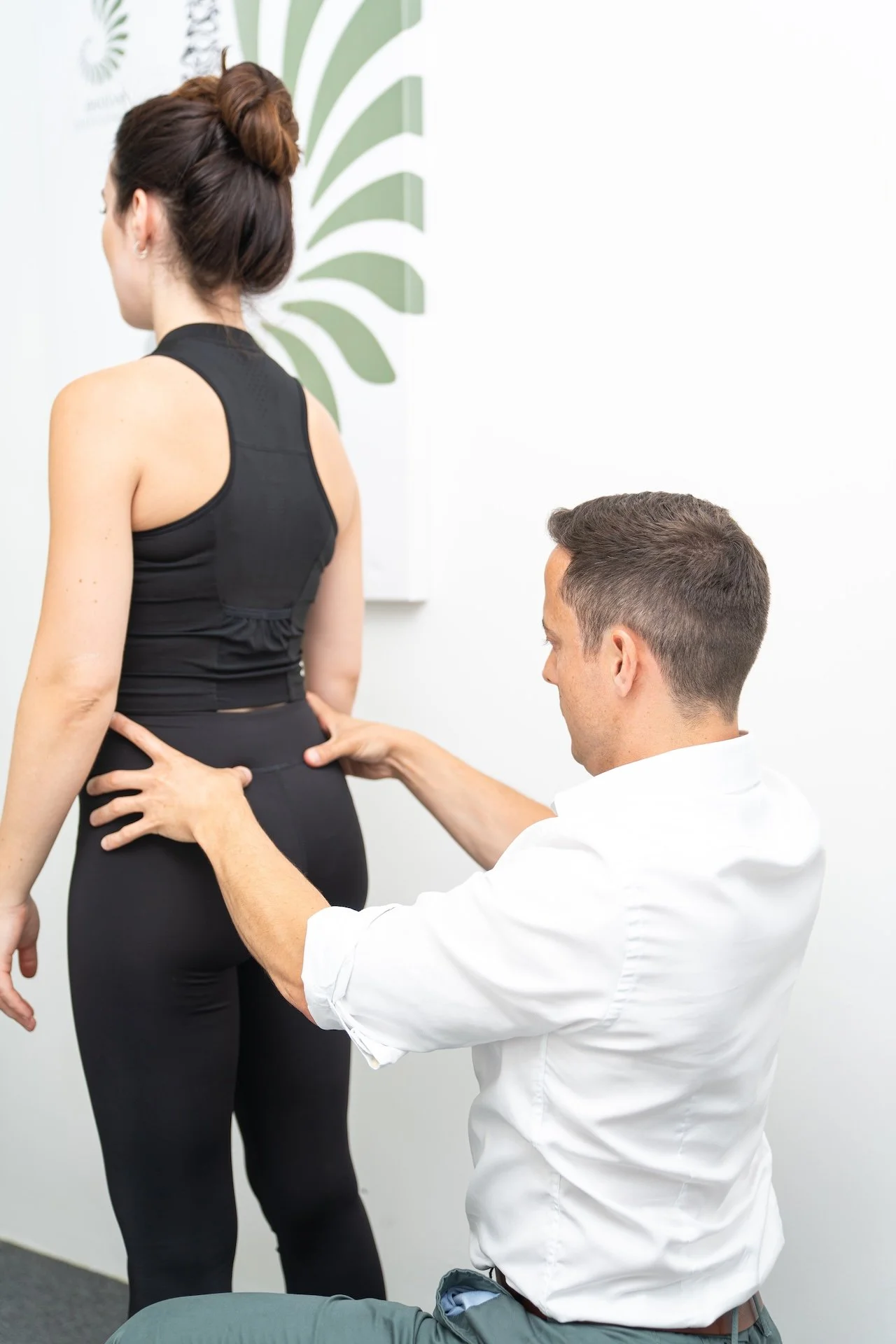
That's why in every new consultation at Evolve Osteopathy, I carry out a thorough postural analysis — looking at spinal curves, forward head posture, and pelvic tilt (particularly left-to-right asymmetry) — to establish a baseline and understand what needs addressing.
The goal isn't to chase "perfect posture" as an aesthetic ideal. It's to improve function by rebalancing the body — and let that process leave pain behind.
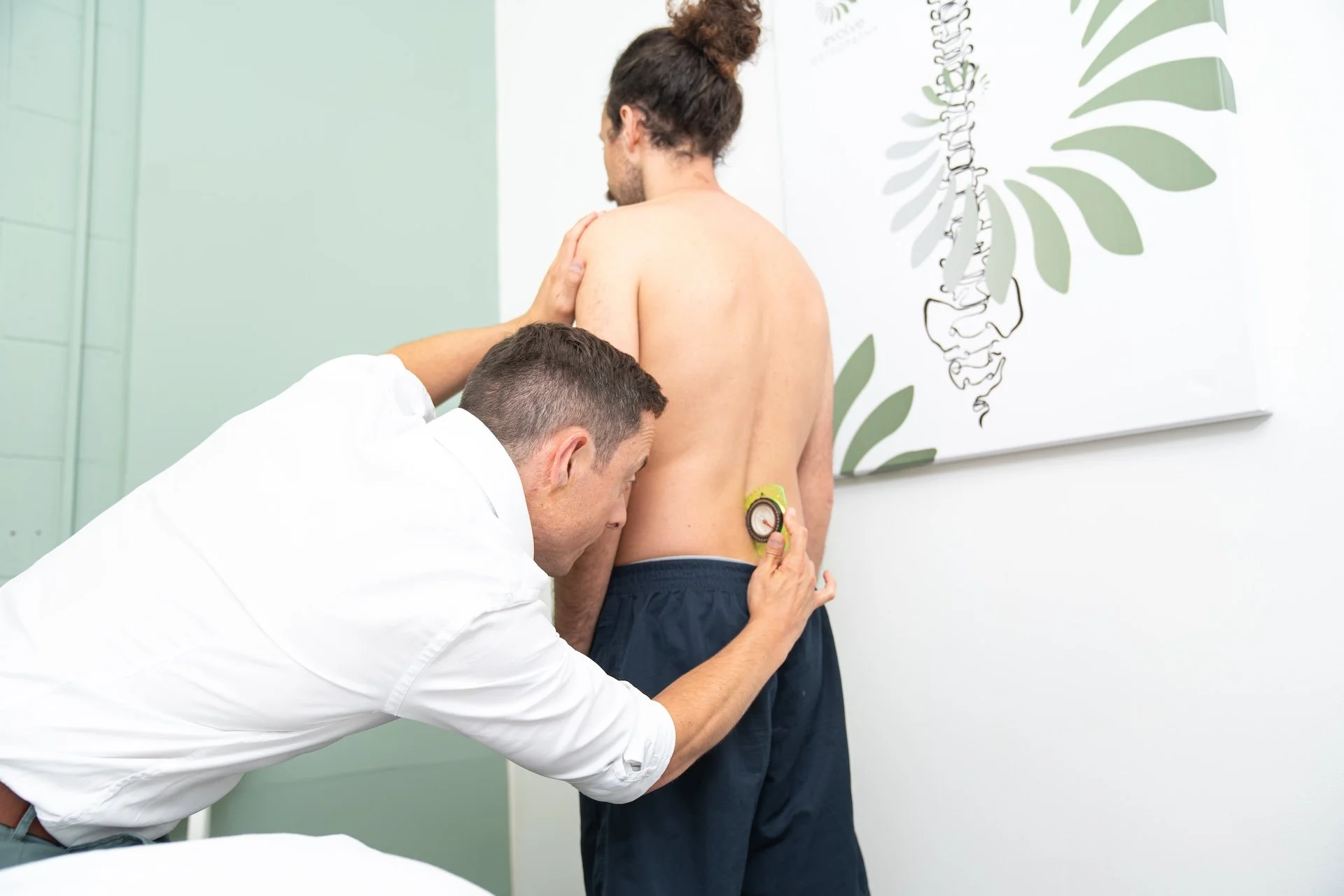
Measuring spinal curvature with an inclinometer.
The Bottom Line
Poor posture doesn't automatically mean pain, and pain doesn't automatically mean poor posture. But optimal alignment supports better function, and better function is always worth pursuing. The approach that serves patients best is to address function first, rather than simply treating the site that hurts.
If you'd like to find out more or book an initial consultation, visit evolveosteopathy.co.uk