
What Is The Crack With Spinal Manipulation?
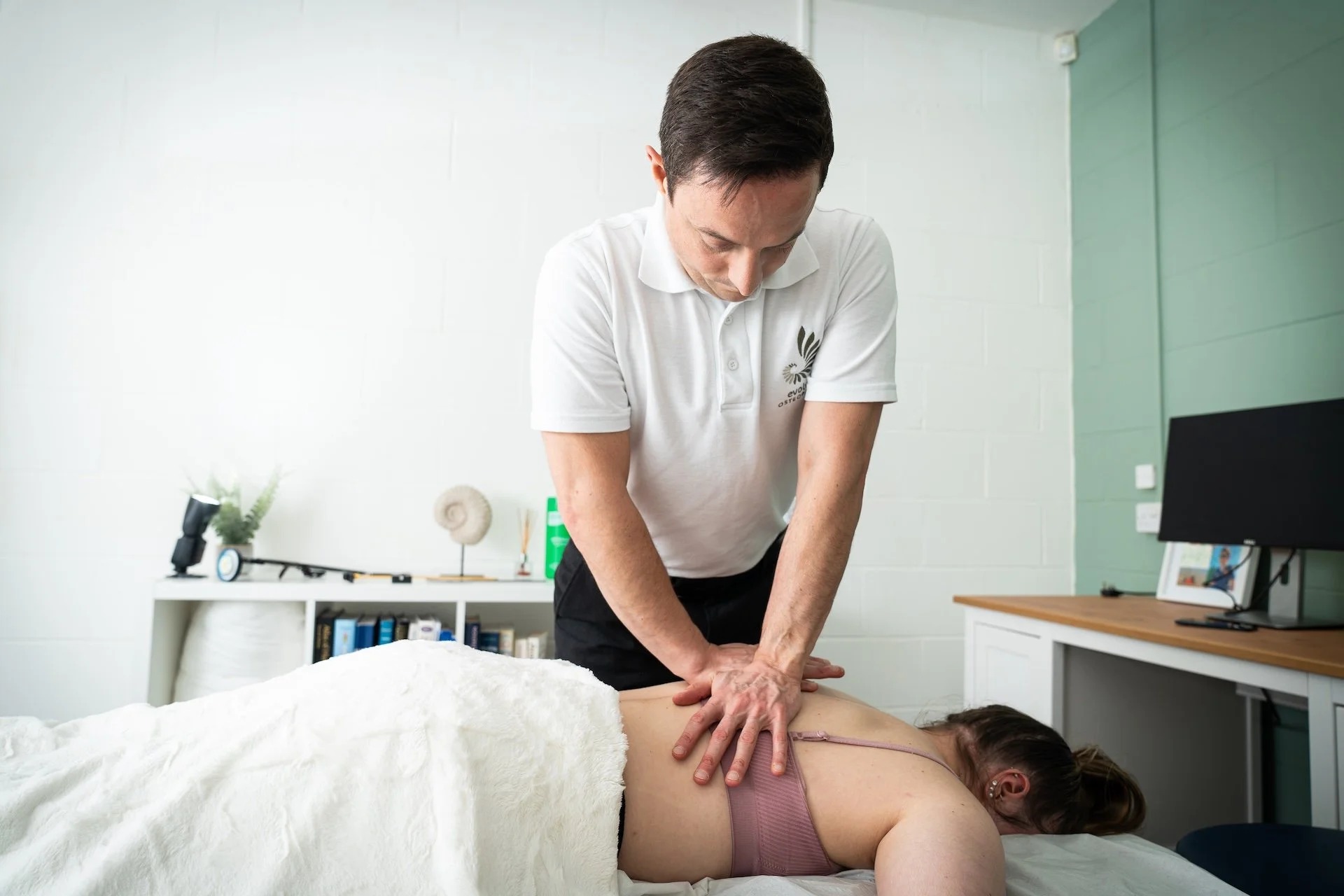
If you've ever had your back or neck "cracked" by a practitioner — or you've heard a friend describe theirs — you've probably wondered what's actually happening. Is something being put back into place? Are you realigning your spine? Is it even safe?
As an osteopath, I get asked about spinal manipulation more than almost any other technique. So let's clear up what it actually is, what it does, and just as importantly, what it doesn't do.
What Actually Happens During a Manipulation?
Spinal manipulation has been used for decades by osteopaths, chiropractors, physiotherapists, and other manual therapists — usually for pain relief, improving joint range of motion, or easing muscle tension.
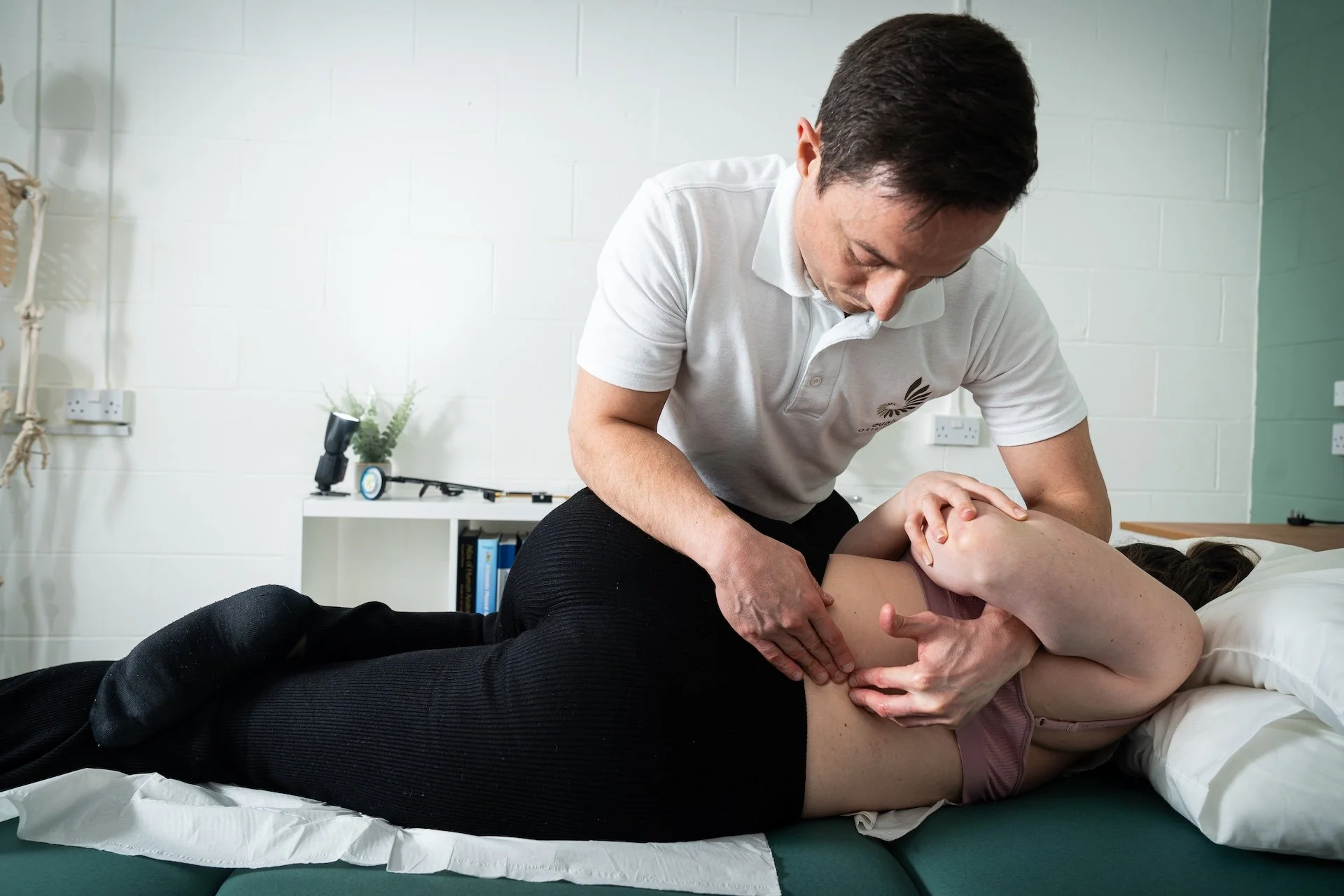
Here's the part that surprises most patients: the audible "pop" isn't your joint going back into place. When a joint surface is opened rapidly with a quick, controlled movement, it creates a brief vacuum effect inside the joint capsule. Gas bubbles form, and as pressure releases, those bubbles pop — that's the sound you hear.
It's a satisfying sound, and a lot of people associate it with a "successful" treatment. But here's the key myth to bust: if the joint doesn't pop, it doesn't mean the technique hasn't worked. The joint has still been opened and moved through its range — which is the actual therapeutic goal. Sound is a side effect, not the point.
Your Body Isn't a Rubik's Cube!
One of the biggest misconceptions about manipulation is that we're "putting something back into place" or "realigning" a bone. We're not. Your spine isn't a puzzle that's come apart and needs reassembling.
What manipulation actually does is restore movement to a joint that's become restricted, and in doing so, it can reduce pain and improve how the surrounding muscles and tissues function. The benefit comes from movement and the body's response to it — not realignment.

Who Might Not Be Suitable for Manipulation...
This is where clinical training really matters. Spinal manipulation uses force and speed, and for some patients that carries genuine risk. It may not be appropriate — or may need to be avoided altogether — for people who have:
Osteoporosis or osteopenia (weakened bone density)
A history of long-term steroid use
A history of cancer, or an existing cancer-related fracture risk
Connective tissue disorders involving joint laxity (excessive joint mobility)
This is exactly why osteopaths train for four years. It's not just about learning how to perform a manipulation — it's about learning when to use it, when a gentler technique like mobilisation or articulation would be just as effective, and when manipulation isn't the right tool for that person at all.
Manipulation Is One Tool, Not the Whole Plan
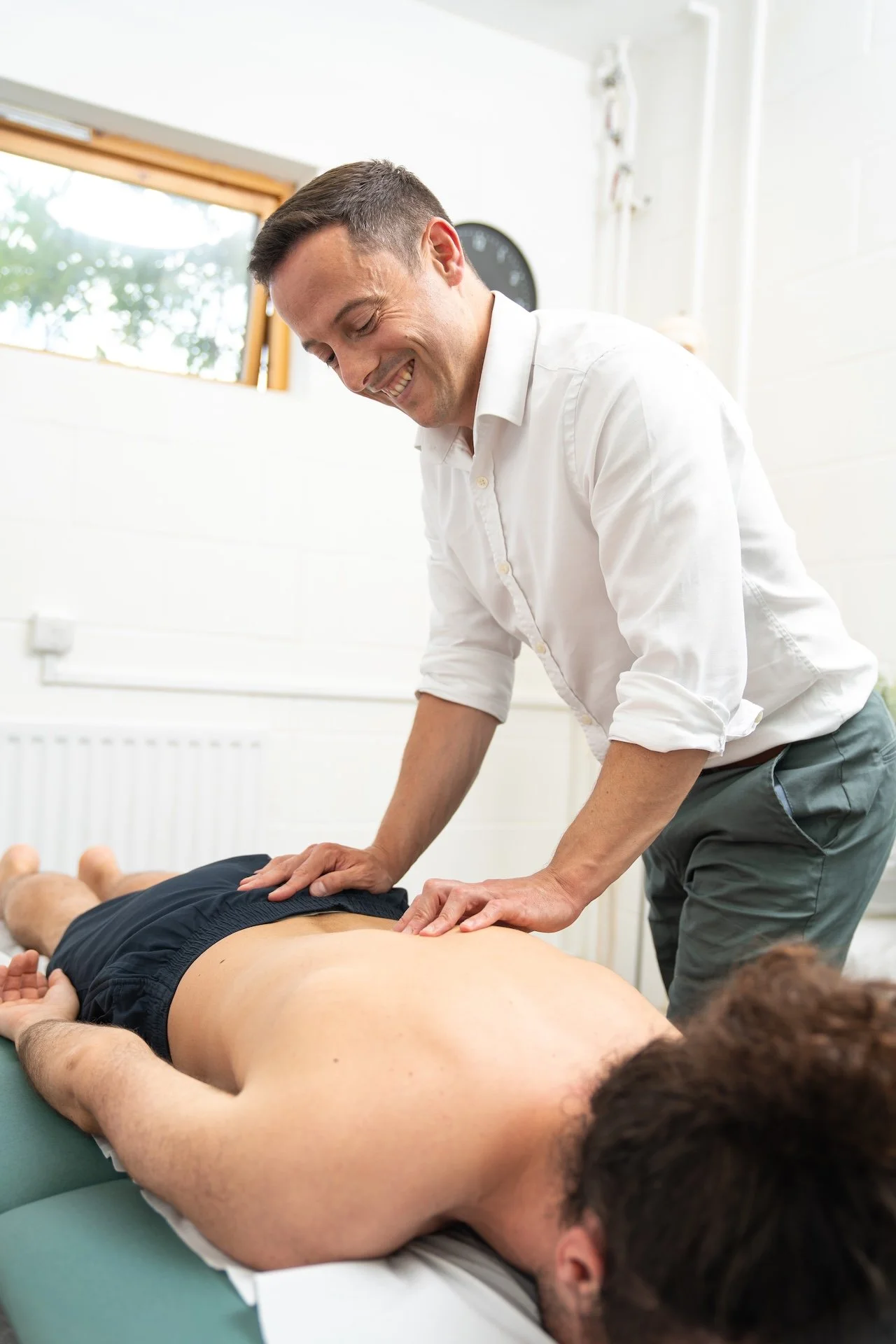
Manual therapy — whether that's massage, mobilisation, or manipulation — is rarely the whole story. Once we've helped restore movement to a joint, the next step is making sure you can maintain and build on that movement yourself. That's where targeted exercise and rehabilitation come in, helping your body hold onto the progress made on the treatment table.
Still Not Sure If It's Right for You?
If you've tried exercises, massage, or medication and you're still not getting anywhere, that's usually a sign it's worth a proper assessment. We'll look at you head to toe and work out together whether manipulation — or another approach entirely — is the right fit for your situation.
Book a consultation and let's figure out the best path forward for you.