
Sciatica Treatment in York & Selby
Sciatica describes pain that travels along the path of the sciatic nerve — typically from the lower back into the buttock and down the leg. It can feel sharp, burning, tingling or numb, and for some people it can significantly affect walking, sitting or sleeping.
While sciatica can be uncomfortable and sometimes worrying, many cases respond well to conservative management when the underlying drivers are properly assessed.
What is Sciatica?
The sciatic nerve is the largest nerve in the body. When it becomes irritated or compressed, symptoms may be felt anywhere along its pathway.
Sciatica may present as:
Pain radiating from the lower back into the buttock or leg
Tingling or “pins and needles” in the leg or foot
Numbness in part of the leg
Weakness in the affected limb
Pain that worsens with sitting, bending or coughing
Symptoms can vary in intensity and distribution depending on the degree and location of nerve involvement.
Why Does Sciatica Develop?
Sciatica commonly develops when the nerve becomes irritated due to mechanical stress in the lower back or pelvis. This may be associated with disc irritation, joint restriction, muscle tension (such as in the deep gluteal region), or prolonged postural load. Reduced hip mobility, repetitive strain, sudden lifting or previous episodes of back pain can also contribute. In many cases, a combination of factors increases sensitivity around the nerve pathway rather than a single structural cause.
Identifying the contributing factors is key to appropriate management.

Why Can Sciatica Persist or Recur?
Sciatic symptoms may settle temporarily but return if underlying movement patterns or load issues remain unchanged. If posture, lifting mechanics, sitting tolerance or spinal mobility are not addressed, irritation can reappear.
A structured assessment helps determine whether the symptoms are primarily nerve-related, disc-related or influenced by surrounding tissues.

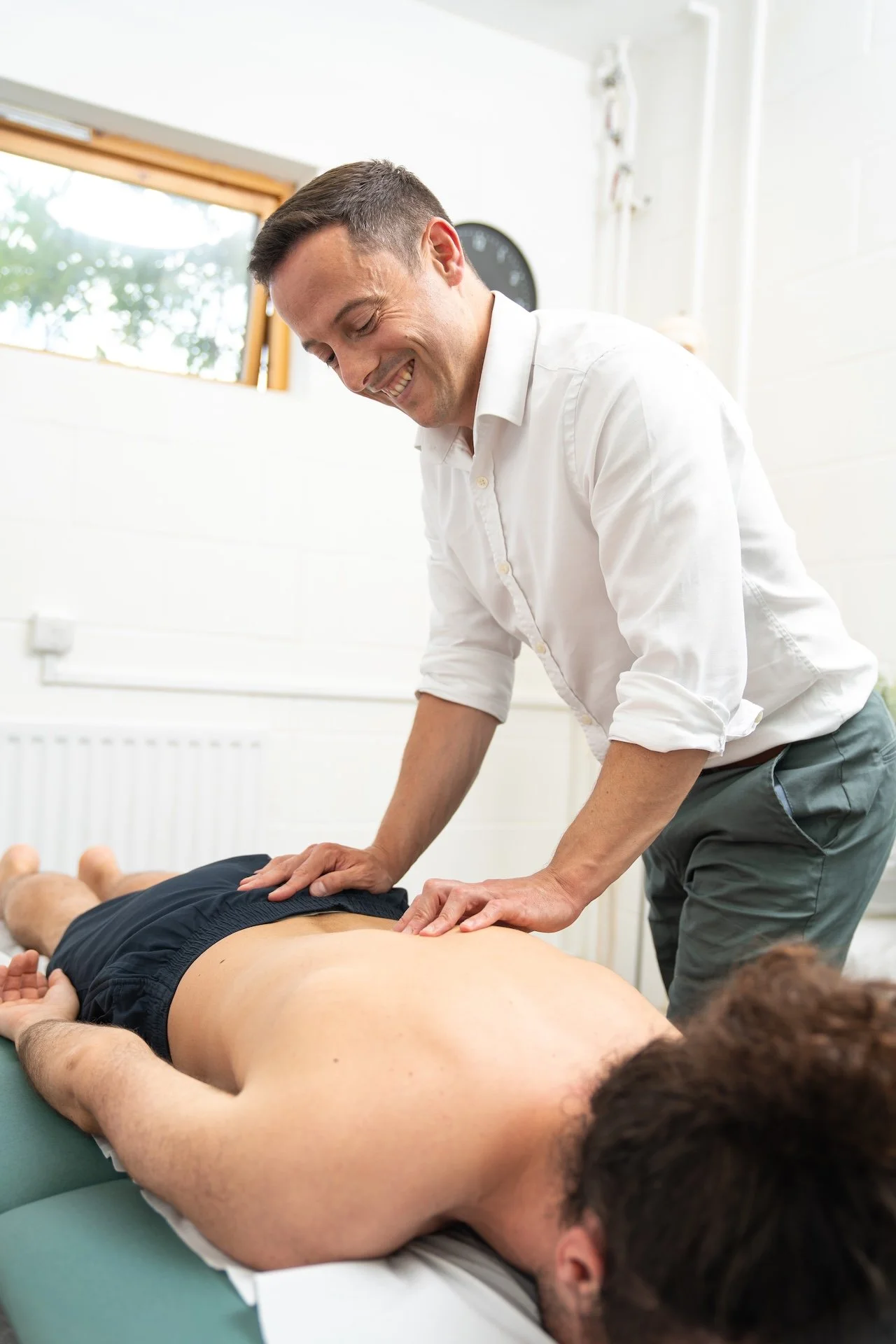
How Osteopathy Can Help
At Evolve Osteopathy, sciatica is managed through a careful and structured approach.
01 Initial Consultation
A detailed case history and examination to assess nerve involvement, spinal mechanics, hip mobility and movement patterns. Screening for red flags is also carried out to ensure conservative care is appropriate.
02 Plan of Action Appointment
A clear explanation of what may be contributing to your symptoms, realistic expectations for recovery and a personalised plan.
03 Start Treatment
Management may include gentle manual therapy, mobility work, neural movement exercises, strengthening and advice on posture and load management.
The aim is to reduce irritation, improve movement capacity and support long-term resilience.
When Should I Seek Urgent Medical Advice?
Seek urgent medical attention if sciatica is associated with:
Loss of bladder or bowel control
Numbness around the saddle region
Progressive leg weakness
Severe, worsening symptoms following trauma
These symptoms require immediate medical assessment.
FAQs
Is Sciatica always caused by a slipped disc?
Not necessarily. While disc irritation can contribute, muscle tension, joint restriction and mechanical load can also play a role.
Do I need an MRI?
Imaging is not required in many cases. Assessment findings help determine whether referral for further investigation is appropriate.
How long does sciatica take to improve?
Recovery varies depending on severity, duration and contributing factors. A clear plan is discussed during your Report of Findings appointment.
Book A Sciatica Consultation
If you are based in Riccall, Selby or York and experiencing symptoms of sciatica, book a consultation to begin a structured assessment.