

If you’re dealing with low back pain, you’re not alone.
Low back pain is one of the most common reasons people seek help from a healthcare professional, including osteopaths. At some point in life, most people will experience back pain to some degree — and for the majority, it’s not something serious.
My name is Tom Smith, and I’m an osteopath and naturopath based in Riccall, between York and Selby. I regularly see people who are worried about their backs, often unsure whether they should “push through” or seek help.
The good news?
Most episodes of low back pain settle within a few weeks on their own.
However, there are times when getting professional advice is a good idea.
When does low back pain usually improve on its own?
In many cases, low back pain improves naturally with:
- Gentle movement
- Avoiding prolonged sitting or rest
- Simple home measures such as heat, walking, and light activity
If your pain is gradually improving, even slowly, that’s usually a reassuring sign. A lot of the time, low back pain can result from a strain to the muscles or ligaments from heavy, incorrect lifting or simply sitting too much and not getting enough exercise. Later in the blog I explain some other common causes or risk factors to getting aches and pains.
When should you seek help?
It may be a good idea to speak to a healthcare professional — such as your GP or an osteopath — if your back pain:
- Persists beyond a few weeks despite best efforts at home to keep pain under control
- Is progressively getting worse and you start to notice new symptoms associated with it.
- The pain keeps returning for no apparent reason.
- Your back pain Is limiting your ability to work, sleep or enjoy everyday life.
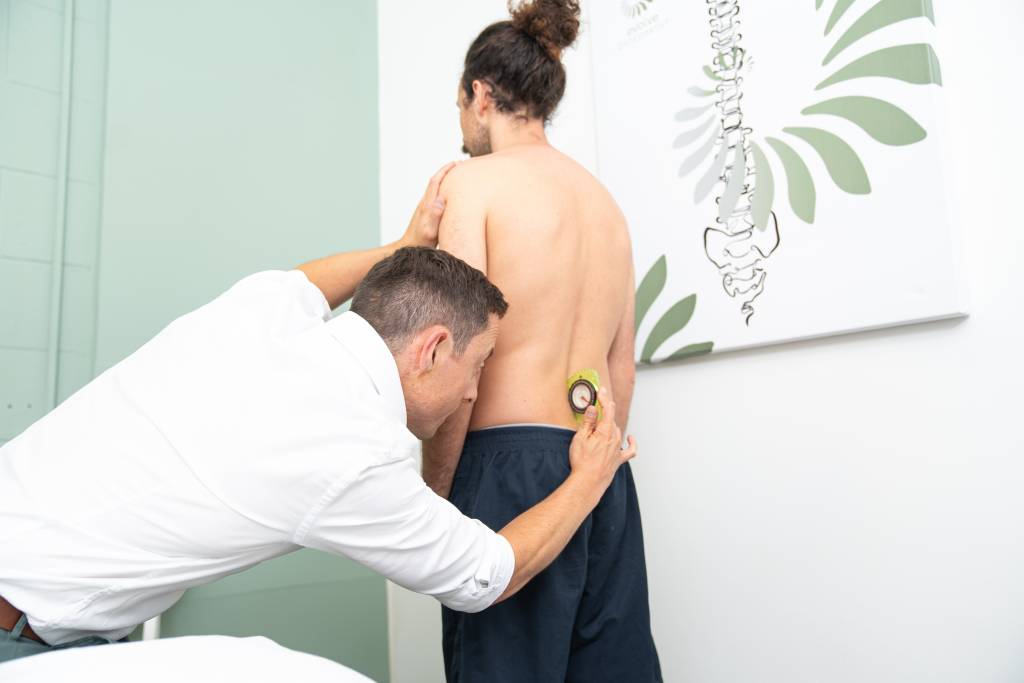
The three phases of low back pain
Clinically, low back pain is often described in three phases:
- Acute low back pain
Lasts from a few days up to 6 weeks - Sub-acute low back pain
Lasts from 6 weeks to 3 months - Persistent or chronic low back pain
Lasts longer than 3 months
Understanding which phase you’re in can help guide the most appropriate management.
Do I need an X-ray or MRI?
Most people with low back pain do not need imaging.
X-rays and MRI scans often show age-related or normal changes that don’t actually explain pain levels. That said, if your healthcare professional is concerned about your symptoms or you show signs of more serious underlying conditions, referral for imaging may be appropriate.
The key point is that scans are used when clinically indicated, not as a routine first step.

How can osteopathy help with low back pain?
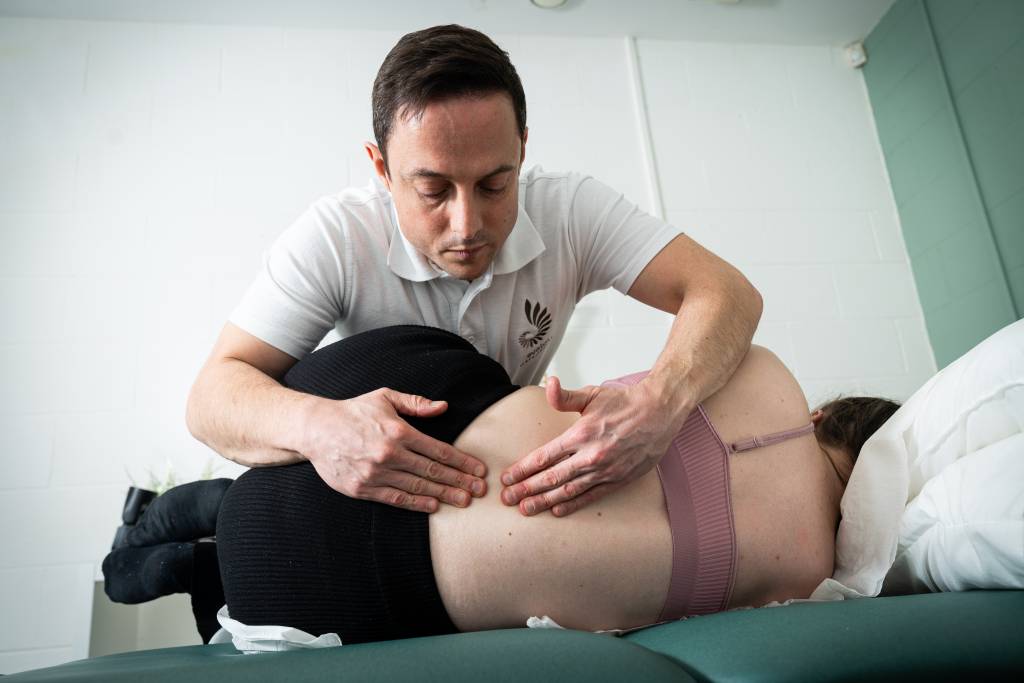
Osteopathy is a hands-on, holistic approach to improving how your body functions — and reducing pain as a result.
Rather than focusing solely on where it hurts, osteopaths look at:
- How your body moves as a whole
- Past injuries
- Posture and daily habits
- Work, stress, and lifestyle factors
Low back pain is rarely caused by one single issue. It’s often a combination of factors such as:
- Previous episodes of back pain
- Prolonged sitting or standing
- Poor or repetitive lifting
- Reduced movement variety
- Psychological and stress-related factors, which can amplify pain
Treatment is tailored to the individual, not just the symptoms.
Extra support: Free low back pain guide
I created a low back pain ebook back in 2016, and it’s still just as relevant today.
If you’d like a copy, feel free to get in touch and I’ll happily send it over.
When to book an appointment
If your low back pain is:
- Worsening
- Not improving on its own
- Or you simply want clarity and reassurance
You’re welcome to book an appointment online for your first appointment.
If you found this helpful, you can also watch the full video where I talk through these points in more detail.