
What's the Difference Between an Osteopath, Physiotherapist and a Chiropractor?

If you're dealing with low back pain — or any ache or pain — you've probably found yourself wondering about three options: whether to see an osteopath, physiotherapist, or chiropractor… They all sound similar. They all deal with musculoskeletal pain. So what's actually different about them?
I get asked this a lot, both by patients (especially the difference between an Osteopath and a Chiropractor) and by students considering a career in healthcare. So here's my honest answer, from my perspective as an osteopath.
A quick note on me first
I'm Tom Smith, an osteopath and naturopath based at the Riccall Regen Centre, between York and Selby. I studied osteopathy in 2011 at the British College of Osteopathic Medicine in London — but that wasn't actually my first choice. I'd played rugby and athletics, and what I really wanted to do was to work in professional sport, ideally football, as a physiotherapist. At the time, though, physiotherapy was more reductionist than it is today. The philosophy of osteopathy aligned much more closely with what I'd already learned through the CHEK Institute — a genuinely holistic approach that considers the body physically, mentally, and emotionally. All three professions have since moved much further toward a biopsychosocial model, recognising how interlinked the mind, body, lifestyle, diet, and stress really are. But back then, osteopathy was already there.
I also went on to train in naturopathy because I wanted to help people beyond just their physical aches and pains — looking at the body nutritionally too. Combined with prior training in massage therapy, neuromuscular therapy, and trigger point work, plus the more subtle, hands-on sides of osteopathy like visceral and cranial osteopathy (commonly used with babies and children), it gave me a toolkit that felt genuinely complete.
Osteopathy
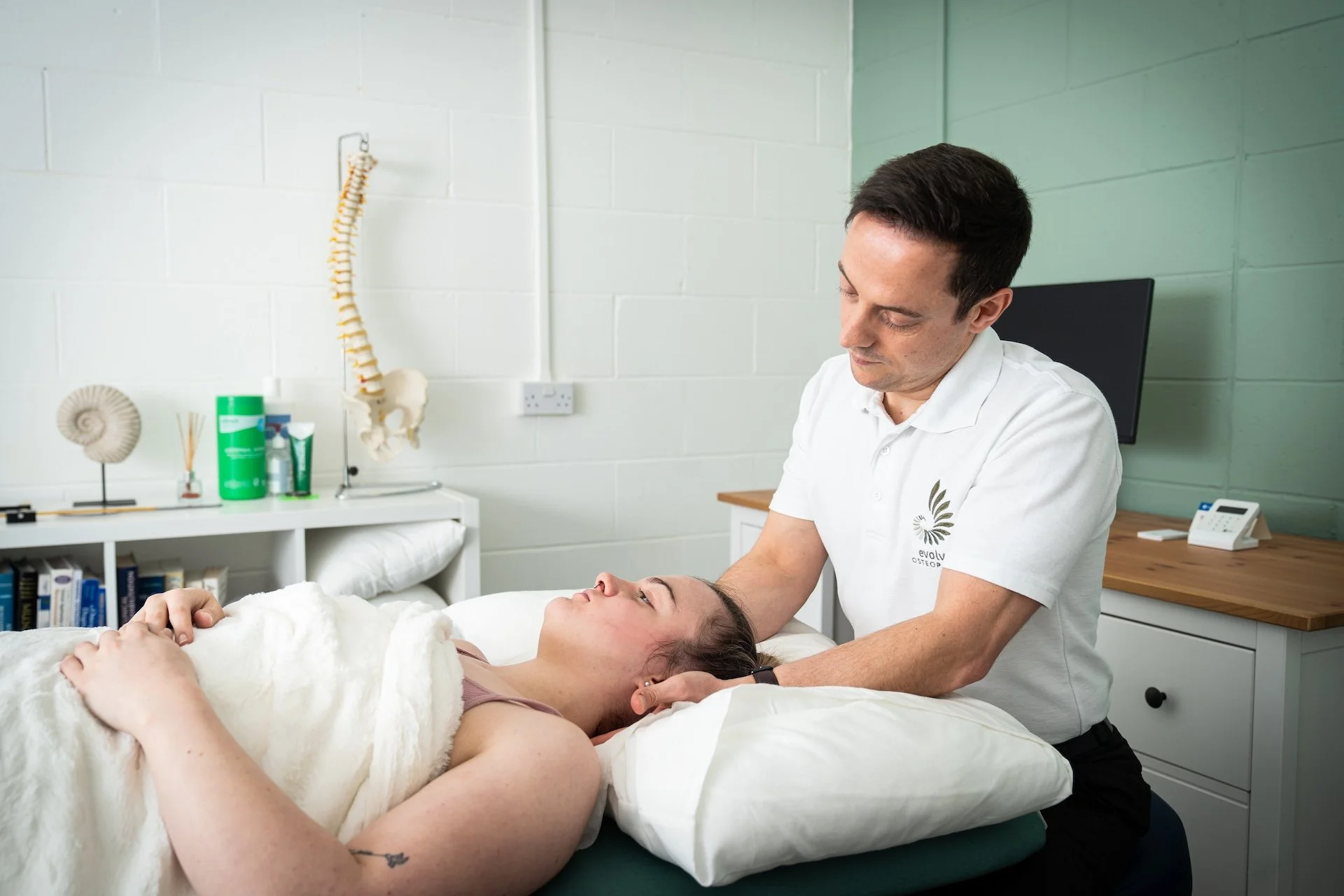
Osteopaths are hands-on practitioners. We use massage, mobilisation, articulation, and spinal manipulation, alongside more specialised approaches like visceral and cranial osteopathy. Every osteopath is regulated by the General Osteopathic Council (GOsC) — it's actually illegal in the UK to call yourself an osteopath without being registered.
One thing worth knowing: your experience can vary quite a bit between osteopaths. Skill set, clinical experience, beliefs, and individual style all shape how a practitioner works. That's part of what makes the profession diverse — but it also means it's worth asking a practitioner about their approach before booking, if it matters to you.
Osteopaths also tend to spend longer with patients. Follow-up appointments are typically 30 minutes, sometimes 45 minutes to an hour.
Osteopathy and physiotherapy are both officially recognised as Allied Health Professions (AHPs) by the NHS — the same group that includes occupational therapists, radiographers, paramedics, dietitians, podiatrists, and speech and language therapists. Chiropractic isn't currently part of that list, though it's regulated to an equally rigorous statutory standard via the GCC.
That NHS recognition opens up more routes into osteopathic careers than people sometimes expect. Some osteopaths go on to become First Contact Practitioners (FCPs), triaging musculoskeletal patients directly within GP surgeries. In some parts of the country — particularly down south — osteopaths have also moved into NHS outpatient roles at Band 5/6 level, the same banding physiotherapists typically work at. And professional sport isn't just a physio pathway either: osteopaths have gone on to work in football, rugby, and even Formula 1.
Physiotherapy
Physiotherapy is a three-year university degree. Physiotherapists are regulated by the Health and Care Professions Council (HCPC).
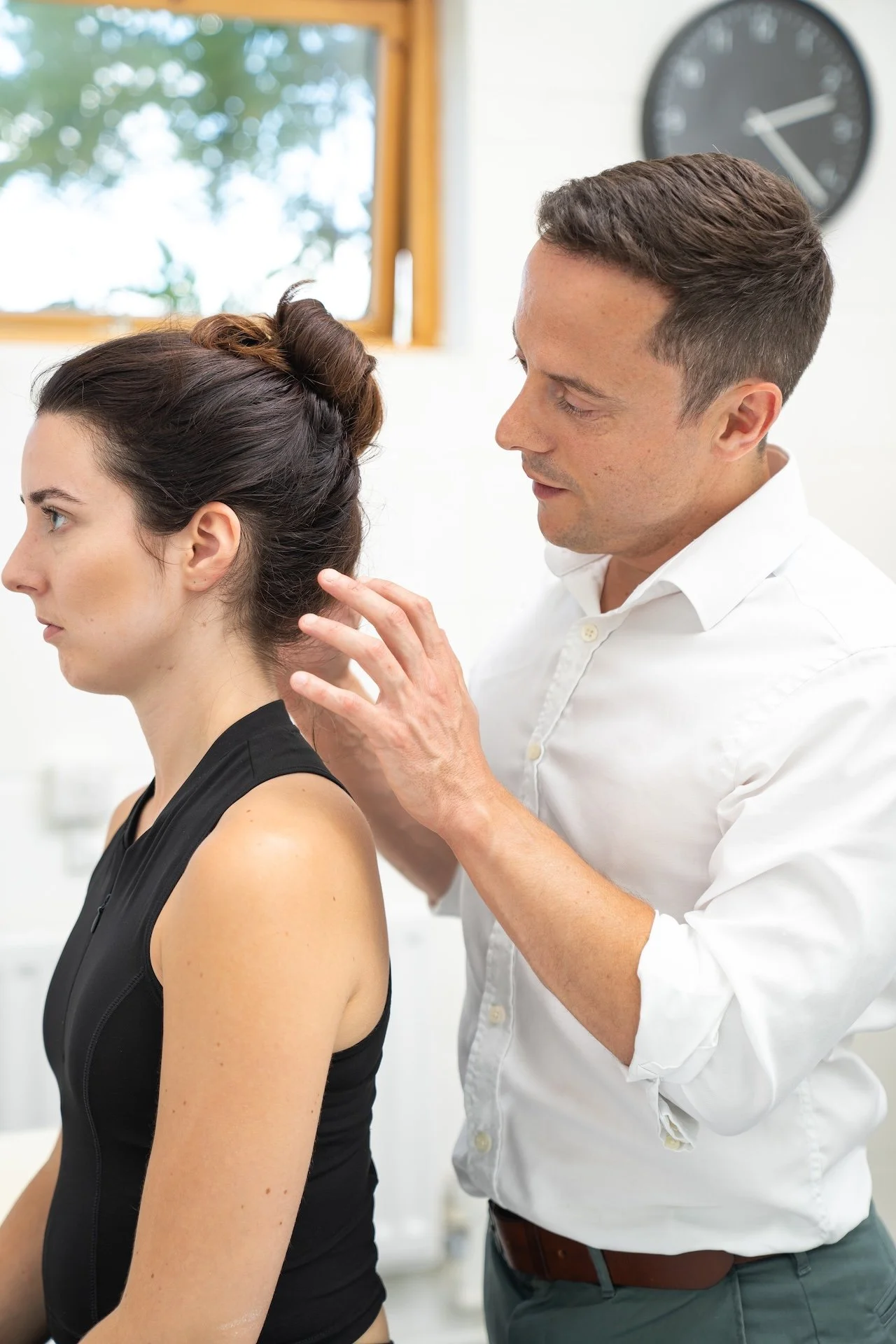
In the NHS particularly, physiotherapy tends to be more hands-off, with a stronger focus on exercise and self-management advice. That's partly necessity — NHS demand means practitioners can't always spend long with each patient or see them many times — but it's also genuinely empowering for patients. As the old saying goes: give a man a fish and you feed him for a day; teach him to fish and you feed him for a lifetime. Having worked in fitness for years before training as an osteopath, that idea really resonates with me. No one should become dependent on passive treatment where they learn nothing for themselves — exercise has to be part of the picture.
In private practice, physiotherapists often do offer more hands-on treatment — manual therapy, massage, stretching — and may use adjuncts like TENS, ultrasound, or shockwave therapy.

Chiropractic
I actually worked in a chiropractic clinic for two and a half years, so I've seen this from the inside. Chiropractors are regulated by the General Chiropractic Council (GCC).
Sessions are usually centred on spinal manipulation. Where that's not appropriate, a chiropractor might use alternative techniques — Thompson drop-table methods, a speeder board, or an activator (a small spring-loaded handheld tool that delivers a quick, gentle force into a joint, with far less force than a manipulation).
Chiropractic training also includes a meaningful amount of radiography and radiology — chiropractors are trained to both take and read X-rays, which can be useful in cases involving trauma or suspected pathology. Osteopathic training includes a radiology module too, but it's focused on knowing when to refer for imaging rather than taking or interpreting X-rays ourselves.
Pelvic alignment and leg length discrepancy assessment also tend to be a particular area of focus in chiropractic — often more central to the approach than in osteopathy. Massage varies by individual chiropractor too: some incorporate it directly, though many don't and instead work alongside a dedicated massage therapist within the same clinic.
Chiropractic philosophy tends to focus on the spine, even when the complaint is elsewhere. Take a shoulder problem: rather than treating the shoulder directly, a chiropractor will often look first to the spine. The shoulder is innervated by C5–C6, so — provided there's no disc issue — they may adjust at that level, on the theory that restoring nerve flow will help resolve the pain and dysfunction in the shoulder itself.
Visit frequency and length vary a lot. You might see a chiropractor more often during a course of treatment, but for shorter sessions — often 5 to 10 minutes, though some practitioners work for 20 minutes to half an hour.
So Where Does This Leave Osteopathy?
An osteopath might also use spinal manipulation, but we won't stop there. We'll typically treat the affected limb or area directly too, using techniques like massage, myofascial work, and visceral techniques, alongside the same kind of structural, spine-focused approach you'd find in chiropractic. It's a broader toolkit applied to the whole picture, not just the spine.
Where The lines Blur
None of this is as clean-cut as it might sound. Spinal manipulation isn't exclusive to osteopaths and chiropractors either — physiotherapists who complete postgraduate training accredited by the Musculoskeletal Association of Chartered Physiotherapists (MACP), the UK's recognised body for advanced manual therapy, also use it as part of their practice. And all three professions can train in dry needling (medical acupuncture); I did mine through the British Medical Acupuncture Society.
The honest truth is that the profession on the appointment card tells you less than the individual practitioner in the room. Two osteopaths can have genuinely different toolkits, and the same goes for physios and chiropractors.
Which One Should You See?
There's no single right answer — it depends on what you're looking for:
| Osteopathy | Physiotherapy | Chiropractic | |
|---|---|---|---|
| Regulator | General Osteopathic Council | Health and Care Professions Council | General Chiropractic Council |
| Training | 4-year integrated master's degree (M.Ost) | 3-year degree (BSc Hons) | 4-year integrated master's degree (MChiro) |
| NHS Allied Health Profession | Yes | Yes | No |
| Typical approach | Hands-on; whole-body | Often exercise-led (esp. NHS); more hands-on privately | Spine-focused; manipulation-led |
| Diagnostic imaging | Refers out; not trained to take or read X-rays | Refers out | Trained to take and read X-rays |
| Session length | 30–60 mins | Varies | Often 5–30 mins |
| NHS availability | Rarely | Yes | Rarely |
| Good fit if you want | A whole-body, hands-on approach with longer appointments | Exercise-based rehab and self-management tools | Frequent, focused spinal treatment |
In reality, there's overlap everywhere — plenty of physios are hands-on, plenty of chiropractors take a broader approach, and no two practitioners within any profession work identically. The best approach is usually to ask a few questions before you book: how hands-on is your treatment style, how long are sessions, and how do you typically approach a problem like mine?
If you're local to the York and Selby area and want to know whether osteopathy is the right fit for you, I'm happy to help. You can book an appointment online at evolveosteopathy.co.uk.