
Can Osteopathy Help with IBS?

Irritable Bowel Syndrome is a common digestive complaint that affects many people worldwide and can be more than just “stomach pain”. Many people experience unpleasant symptoms such as cramping after meals, bloating, unpredictable diarrhoea or constipation, fatigue, even backache and nausea — IBS has a habit of affecting people lives in many ways.
As an osteopath and naturopath I see plenty of patients who come to me for back or neck pain and, almost in passing, mention they also live with IBS or other background diagnosis they have lived with for years. That overlap isn't a coincidence, and it's part of why I wanted to put together a proper explanation of where osteopathy fits into IBS management.
Feel free to watch my video blog from my You Tube Channel below:
Usual First Port of Call
Most people's first port of call is entirely appropriate: your pharmacist or GP, who may offer medication to manage diarrhoea, constipation, or stomach pain/cramping. A food diary is genuinely useful for identifying triggers, and a dietitian may recommend a low FODMAP approach — temporarily reducing certain fruits, dairy, and wheat-based foods to see what settles symptoms.
These are sensible, evidence-based first steps, and I'd encourage anyone with IBS symptoms to start there. But if you've done all of that and symptoms are still getting in the way, an osteopathic approach can offer something additional — not as a replacement, but alongside your existing care.

An Osteopathic Approach
The aim isn't to cure IBS and fix the gut however Osteopathy can calm down the nervous system that governs it, improve lymphatic drainage, and ease any restriction in the spine that may be affecting the nerves feeding into your digestive organs.
Your gut has its own nervous system - the enteric nervous system, or sometimes called the "second brain" — which drives the baseline rhythmic contractions (peristalsis) that move foodstuff through your digestive tract, and regulates muscle and sphincter tone in the gut wall. But that system doesn't work in isolation. It's influenced heavily by your autonomic nervous system: the sympathetic branch (your fight, flight, or freeze response) and the parasympathetic branch (rest and digest).
IBS symptoms often flare when the sympathetic system is dominant — think stress, tension, poor sleep — at the expense of the parasympathetic "rest and digest" state your gut actually needs to function well. Osteopathic treatment is largely aimed at helping shift that balance back toward parasympathetic dominance. A bit like a seesaw!
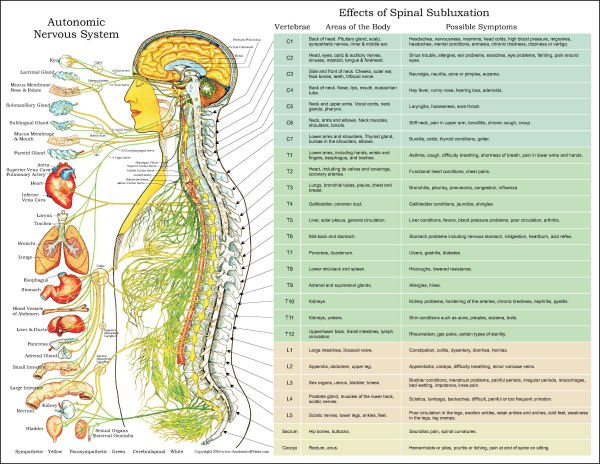
This is a chiropractic image of the Autonomic system and its spinal segmental relationships.
How I Do This In Practice
A few of the techniques I use:
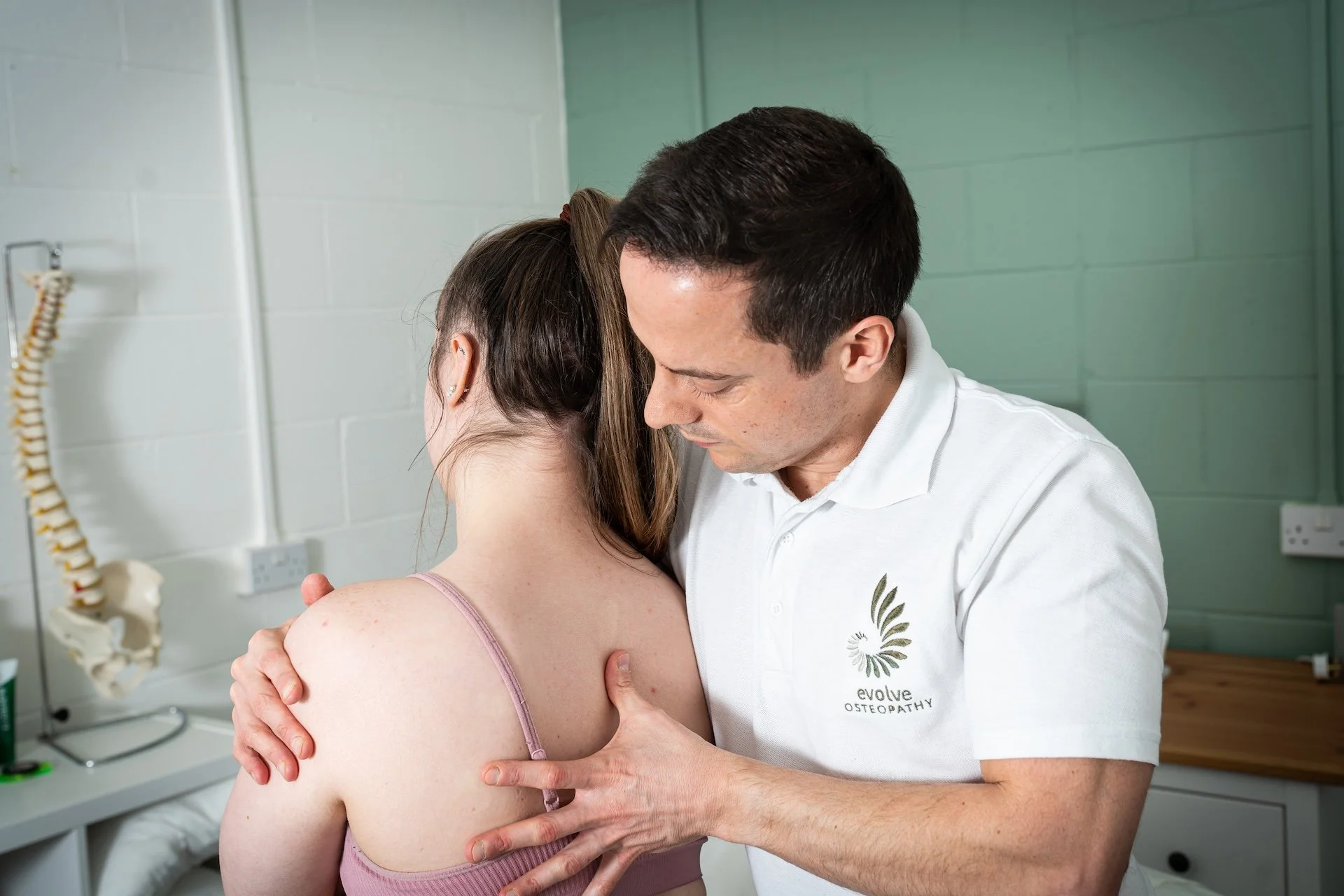
Rib and spinal work — Treating restriction, muscle tension, and areas of the spine that may be irritating the nerves supplying your organs. The nerve segments from roughly T6–T9 supply the oesophagus, stomach, gallbladder, liver, and small intestine; segments from T10–L2 supply the large intestine — ascending, transverse, and descending colon. Rib raising and gentle articulation can help ease tension along these levels.
Sacroiliac and sacral work — The sacroiliac joints and sacrum carry a significant parasympathetic supply. Gentle decompression and mobilisation here can support that "rest and digest" shift.
Cranial techniques — Releasing tension around the base of the skull (suboccipital muscles, the occiput, and the top two neck vertebrae) and assessing the tensions around the skull, both of which relate to vagal and parasympathetic function.
Lymphatic drainage — Using techniques such as mesenteric lifts, and releasing the diaphragm, thoracic inlet, and pelvic floor to encourage to pump lymphatic flow. Where there's inflammation or congestion around the digestive organs, supporting lymphatic drainage can genuinely help settle symptoms.
An Important Caveat
I want to be clear: osteopathy doesn't treat or cure IBS, or any gastrointestinal disorder. What it can offer is support alongside your existing medical management — helping calm the nervous system, ease physical restrictions that may be contributing to symptoms, and support drainage and circulation around the digestive organs.
If you're already under a gastroenterologist, GP, or dietitian, osteopathic treatment is something to consider as an addition to that care, not instead of it.
If this sounds like it could be useful for you, get in touch to discuss your case, or book online at evolveosteopathy.co.uk. I'm based at the Riccall Regen Centre, between York and Selby.